Showing posts with label how to. Show all posts

Sunday, January 03, 2021

Making A Mark: the 20 most popular blog posts for artists (Part 2 2006-2019)

This is a list of Making A Mark blog posts from previous years (2006-2019) - unrelated to art on television - which have proved to be perennially popular - and were the most popular in 2020

It follows on from yesterday's post Making A Mark - the 20 most popular blog posts for artists in 2020 (Part 1) - which highlighted how art on television - rather than in exhibitions - became very popular in 2020 due to the pandemic.

Summary

As last year five of the ten are "how to" posts - although interestingly not the same five as last year! If you write a good "how to" post on your blog about perennial topics it can be of value and generate traffic for very many years - but popularity and relevance can come and go.

I'm also noting which are NEW ENTRIES and which have moved up or down compared to last year's post Making A Mark - the 20 most popular blog posts in 2019. The Pandemic has had an obvious impact on some.

Please note that I've excluded all television posts from previous years as they get their moment in the limelight in the most popular posts in a year - see yesterday's post Making A Mark - the 20 most popular blog posts for artists in 2020 (Part 1)

#1. Favourite quotes about drawing and sketching

The mobile version of Favourite quotes about drawing and sketching (2013) was the most popular post in 2020 - by some considerable distance.
Do not fail, as you go on, to draw something every day, for no matter how little it is, it will be well worth while, and it will do you a world of good.
Cennino Cennini
L'Écho, study for Une Baignade, Asnières (Bathing Place, Asnières) by Georges Seurat
Conté crayon on Michallet paper. 31.2 × 24 cm

Last year it was #2 - and was outranked by my somewhat encyclopedic annual guide to the BP Portrait Award in 2018. 

Last year I said I kept meaning to do an update to this post and this year it's definitely going on my 'to do' list.

#2 How to hang a large or heavy picture - using heavy duty hanging hardware

How to hang a large or heavy picture - using heavy duty hanging hardware (2015) has moved up one place as the BP slipped out of the rankings

I can only think nobody else has written a decent post about this topic. It's certainly the case that is something you don't want to get this wrong - which is why this post beats the next one on traffic! Includes pics of kit you need and helpful videos!

However this might also reflect activities associated with Covid-19 lockdowns (see the next post!)

#3. How to hang a picture - using D rings

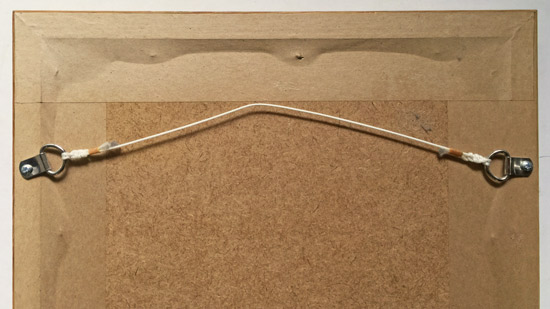
How to hang a picture - using D Rings (2015). This post is particularly relevant for smaller paintings and drawings.

PLUS:
  • I've now also got a page about How to hang a picture on my Art Business Info for Artists website
  • I also wrote a summary blog post about How to hang a picture back in April 2020 when it suddenly struck me that lockdown is when everybody decides to 
    • redecorate 
    • and/or completely rehang their art collection 
    • and/or finally get round to hanging those paintings they've bought which have never quite made it on to the wall. (I know that's one of the things I did!
Hanging hardware


#4. Creating a signature on your art

Creating a signature on your art (2009) - moved up five places this year.

This is one of those perennial issues which comes up time and time again concerns the best way to sign your art. 

This is of course quite different to another type of signature - Signature membership which I also wrote about in 2009.

#5. Who knew Giles from Gogglebox was an artist?

Who knew Giles from Gogglebox was an artist? (2018) is a NEW ENTRY in the top ranked older posts

It just goes to show that art and television seems to be a very popular connection. (Television posts are banned from this post - but this one is allowed in because Giles does not do art on television!)

#6. Artists and Repetitive Strain Injury (RSI)

Artists and Repetitive Strain Injury (RSI) (2016) is another climber - up four places from #10 last year.

Again this is one of those perennial topics which is often searched for but rarely produces a decent response. I think this one still comes top on Google.

#7. How to create a 'search description' for your Blogger post

How to create a 'search description' for your Blogger post (2009) - This is a NEW ENTRY and one which I suspect has cropped up due to the change from Legacy/Classic Blogger to New Blogger. 

#8. What kind of art do people like to buy online?

What kind of art do people like to buy online? (2016) is another NEW ENTRY.  This post covers:
  • the similarities and differences between the type of art that British and American people buy online
  • how this compares to the type of art that people like to paint.

Based on sales data in 1 January - 31 December 2015 (Source: Artfinder)


I suspect this post has popped up because of the unique nature of 2020 - when an awful lot of art exhibitions and art fairs did not take place. Hence more and more artists have turned to trying to sell their art online.

I think maybe it's now time to revisit this post - maybe via a poll or survey to see whether anything has changed in the Covid-19 era.

In the meantime - for all those interested in this topic - please take a look at the big section about How to Sell Your Art on Art Business for Artists

#9. How to sign an art print


How to sign an art print (2011) has dropped four place since last year. However it's a detail that matters - and for some reason there's not many "how to" articles!

#10. How to do a reverse image search


How to do a reverse image search
(2011) is another blog post about a perennially popular search query - which has also dropped four places. 

You can find the updated version here - How to do a reverse image search in the Copyright section of my Art Business Info for Artists website.

Addendum


One of the things I tried to do when I started this blog was to write about things which I thought artists needed or wanted to know about - but which weren't covered terribly well online. 

That's still the case - and if you ever get a query where you cannot find a satisfactory answer, do please let me know and I'll see if I can come up with one! Although I try to avoid practical matters I've no experience of!

Wednesday, January 01, 2020

Making A Mark - the 20 most popular blog posts in 2019

I've split the 20 most popular blog posts in 2019 between
  • those written in 2019
  • those written between 2006 and 2018 - which demonstrates just how much traffic some old posts can generate!
All posts are ranked according to the number of page views they generated - which are all in the thousands.  Some of those which have been around for some years get a lot more than those written in 2019 - I guess because they're referenced by various websites.

These posts are - unrelated to art competitions on television. To see these read yesterday's blog post The Most Popular Art Programmes on Television in 2019

Points to note:
  • Art Competitions and Open Exhibitions fall in and out of favour
  • Blog posts with global appeal with always get a bigger audience than those of interest just to a UK audience
  • "How To" posts about matters relating to art are always welcomed - and constantly referenced!

In 2019


I play a little game with myself and try to guess what might be in the top 10 It's surprising what I'd already forgotten - such as the death of Charles Reid or the fire at Notre Dame.....

1. Call for Entries: Portrait Artist of the Year 2020 

Although this is television related it's about the entry to this art competition and hence I'm treating it as any other Call for Entries post. What's so very interesting is that it beat the RA's Summer Exhibition post - and the Call for Entries for the BP Portrait Award 2019 - which says rather a lot!


2. RA Summer Exhibition 2019: Call for 12,000 entries 

+ RA Summer Exhibition 2019 UPDATE + prediction re emphasis of selected work - one post in two parts. Plus it's worth also noting OFFICIAL: No 12,000 cap on entries to RA Summer Exhibition + dates change which is an an update on - and clarification of my original Call for Entries for the Summer Exhibition

3. Owner of Artist Network, Wet Canvas & North Light Books files for Bankruptcy 

I guess a global audience for this one helped a lot. This was major news for artists around the world who used one or more of their activities. I helped a couple of artists who had to file in Court in order to try and get their unpaid royalties for books they'd written for North Light. Plus I ended up names in one of the Court documents which was recording all the authors of books published by North Light!
This is the follow up post F&W Media Bankruptcy Protection UPDATE re SALES of Artist Network, Wet Canvas & North Light Books

4. Selected Artists and statistics - BP Portrait Award 2019

This post is about the artists behind the 44 portraits selected for the BP Portrait Award 2019 Exhibition at the National Portrait Gallery

5. About Charlotte Johnson Wahl - artist and mother of Boris

Although a television programme, I'm including it here because it's more like a story about an artist. It's a retrospective of a retrospective exhibition by the woman who is mother of the man who is now Prime Minister - and who has continued to paint every day despite mental health issues and Parkinson's Disease. I watched it again recently and found it very rewarding to watch.

6. 40th BP Portrait Award (2019) Shortlist

This is my Making A Mark analysis of this year's shortlisted portraits - and the artists who created them.

The portraits shortlisted for the BP Portrait Award 2019

7. RIP Charles Reid (1937 - 2019)

I'm sure all of us who were fans of him all have our own memories of "our connections" with Charles Reid - even if we never ever met him. This post was about mine.....


8. Call for Entries: Society of Women Artists Annual Exhibition 2019 

Well done to the Society of Women Artists to be the first 'ordinary' national art society call for entries to be in this TOP 10 list. Women on top!

9. 10 Best Paintings in the Sunday Times Watercolour Exhibition 2019 

The 10 paintings in the Sunday Times Watercolour Competition 2019 which impressed me. By which I mean
  • They caught my eye on my first turn around the gallery - from a distance of some 6 feet+.
  • Then kept it on my second go round - when I'm looking more closely at the paintings. 
  • Then survived the cull as I went around for the third time to work out my 10 best paintings!

10. The Destruction of Notre Dame - only the stone will remain

Many, many people in Paris and around the world watched as huge flames burst through what was the roof of Notre Dame and then watched it collapse. Both sides of the Seine were also lined with thousands of people watching the fire.

The Destruction of Notre Dame

In addition two of my Blog Pages remain perennially popular. These are:

PAST: posts from previous years (2006-2018)


Posts from previous years - unrelated to art on television - have proved to be perennially popular and some have almost taken on a life of their own!

Note that five of the ten are "how to" posts. If you write a good "how to" post about perennial topics it can be of value and generate traffic for very many years.

Wednesday, October 28, 2015

How to hang a painting - using mirror plates

This is the third post in a series of posts about how to hang a picture using different types of hanging hardware

This post considers what a mirror plate is, why use mirror plates and how to attach them to a frame.

The previous posts are:

What is a mirror plate?


A Mirror Plate - also known as a picture frame plate - is a piece of metal (usually brass) designed to lie flat against the back of a mirror or picture frame. It's then used to attach the mirror or picture frame to the wall - usually using screws.

This is what a mirror plate looks like.

A brass plated mirror plate

They come in different sizes and can have different sized screw holes. The screw holes are usually flat on one side and counter sunk on the other side.

They are normally solid brass, brass plated, nickel plated or carbon steel. Some have three plain holes while others have two plain holes for the frame and a slotted hole. Some are completely flat both sides, others have a one side which is counter sunk.

For larger works, the plate is normally rectangular and includes a number of holes for additional security.

You can see a range of mirror plates in the selection offered by
Other suppliers also have them and you should be able to find them in store at the major DIY stores although they sometimes don't list them online.

You also need the appropriate sized screws to fix them. These should be the same metal as you select for the plate (eg brass screws with brass plates). The screws also need a surface which will take screws!  Do not use nails as they are not generally not strong enough nor long enough!

If you are hanging anything very heavy you will also need rawl plugs and longer screws and heavy duty plate fixings.

Why use a mirror plate?


The benefits of using a mirror plate are as follows:
  • the frame is secure on the wall and cannot be removed without the use of a screwdriver. This is why they are often a standard fixing for exhibitions where you want to ensure nobody can lift a picture off a hook and walk out with it. 
  • the frame is flush to the wall and does not lean out in any way. 
  • frames which include mirrors or glass are safe. If anybody brushes against the frame it will not move and cannot be dislodged easily
  • It enables you to position a frame accurately on a wall. You don't have to guess where it will end up once the slack in the hanging wire is taken up
The downside of a mirror plate is that you are left with a hole when you take the picture down. However this can be filled and painted over. This is what very many galleries do all the time.

How to fix a mirror plate into a frame


Assembly Kit: You need:

Friday, October 23, 2015

How to hang a large or heavy picture - using heavy duty hanging hardware

The critical factors you need to know when hanging a heavy picture are:
  • what weight the picture is
  • what sort of hanging hardware is best for the job
  • what sort of wall you are hanging it on.

'How to hang a picture' series


This post considers how to hang a heavy picture, why use heavy duty picture hangers and how to attach them to a frame.

It's the second post in a series of posts about how to hang a picture using different types of hanging hardware.

What is a heavy picture?

In plain simple terms:
  • a very heavy picture is one which you wouldn't think twice about trying to hang without an extra pair of hands.  The issue is NOT whether you can lift it. It's about whether you have the strength and motor control in your upper body to execute a manoeuvre to hook it onto the wall on two sides - while holding it above your head.
  • if you would struggle to hang a picture on your own because of size or weight then you ought to be thinking seriously about heavy duty hanging hardware - and checking the wall!

What's the issue with walls?


This is the question frequently not asked by people whose large and/or heavy paintings fall off the wall.

INTERIOR Walls / Drywalls


Interior walls are built using a wooden framework and some form of covering - often plasterboard in modern houses.  They're not really suitable for hanging anything heavy. Light and medium sized pictures can be hung on dry partition walls using picture hooks which are hammered into the walls using long hardened or steel pins.

However steel pins are not long enough nor are they strong enough to hold heavy weight pictures and should NOT be used - unless you want your picture to fall off the wall.

Ideally you should aim to hang medium sized pictures where the stud frame is (i.e. into wood which provides a more stable structure) but the chances are the location of the wall stud does not fit where you'd like to hang your picture.  To check their location you need to use a stud locator.

My studfinder - invaluable for older properties and where you have drywalls.
If you know the drywall is robust you can use a special anchor for dry walls.

If like me you live in an older house you might find that some of your original interior walls are made of lath and plaster and the rule for these is you absolutely MUST find the wall studs before you hang anything. (I've got a shelf at the top of the lathe and plaster wall I'm currently facing - however it has heavy duty shelf brackets in every single stud as it crosses the wall!)

All the artwork I possess - except for the smaller lighter works - are hung on brick walls - see below.

EXTERIOR or load bearing walls


Domestic homes will always have exterior walls and load-bearing walls which are suitable for hanging items which are a heavy weight. Typically in the UK the wall is a solid masonry (brick or stone) wall or a concrete block wall.

These are the walls from which to hang a very large or very heavy picture (or mirror i.e. there's a good reason why very large mirror are very often found on chimney breasts). That's because this type of wall can take the longer screw length which might be required to get a solid fix.

If you're hanging artwork in another sort of space you need to check what sort of wall it is.
  • Banging on the wall often provides a good indication. If it sounds hollow then it's an interior dry wall. 
  • The other trick is to bang in a nail. If it's easy to hammer in then chances are it's a drywall. If it takes a lot more effort it's probably a masonry wall. If it's really difficult to impossible then it's very likely you've hit concrete and only drills and screws (and a heavy duty electric drill) will work.  The same can be said for good quality exterior brickwork.
One further consideration is the decoration. 

If you think you might want to move paintings around a lot I wouldn't favour walls which are wall papered!  It's easy to fix holes in a painted plaster wall - but sorting out multiple large holes in nice wallpaper is a bit of a challenge!

What is heavy duty hanging hardware?

Heavy duty hanging designed to provide a more secure fixing to large and/or heavy pictures. They're made of more robust metal and commonly have at least two if not three screw holes.

It requires TWO bits of complementary hardware:

  • the heavy duty hanger -  this is a flat steel plate with a a hanging loop at one end which is fixed to either side of the back of the picture frame. It's often plated in brass and has at least two and often three holes to ensure a secure fixing should any one screw work loose. They are often between 50mm and 90mm in length.  They can have either:
  • the heavy duty J hook - this is fixed to the wall and is the mate for the heavy duty hanger fixed to the frame. It provides the secure structure over which the D ring or loop is hung. 


Why use heavy duty hangers?


Hanging is basically as good as the weakest point within the apparatus and the level of tension placed on any weaknesses.  Hence in general it's advisable not to use wire and d rings for very heavy pictures because it's been known for the wire to create a lot of strain that in turns pulls a one screw D ring out of the back of the frame - and the picture comes crashing down.

Heavy duty hanging hardware prevents:

Thursday, October 22, 2015

How to hang a picture - using D Rings

I'm going to be doing a number of posts about how to hang a painting. These will consider different aspects of what's involved in hanging a painting and hanging an exhibition.

This first post will consider how to hang a picture frame using D rings - using two different approaches for different size and weight of picture - and includes images and videos to show you how to use D rings.

A small artwork framed using D rings as hanging hardware
Note how the professional framer has used single strand of picture cord
and then knotted and and whipped the ends
If you find this post helpful please share it with your friends and/or share using Twitter or Facebook.

[ Update: The next two posts are:


What are D Rings?


D rings are a very common type of hanging hardware used by professional picture framers and also available to all artists via retailers in the high street and online (see below for links to some of these in the UK).
  • They comprise a ring - in the shape of a letter D (hence the name) and a plate with a screw hole.
  • D rings are always used in pairs - screwed into the back of the frame. 
  • They can have one screw hole or two. One hole is suitable for lighter works. As the weight increases (eg medium sized pictures) use a D ring with two screws for greater security.
  • The ones most commonly used for small works are nickel plated.  
  • The type of screws used should be matched if possible to the type of D ring used.

Use of D Rings:

  • Which way the D Rings are screwed into the frame depends on the size/wight of the picture and which method is used for hanging using D Rings (see below for smaller/lighter pictures and tomorrow's post for larger/heavier pictures)
  • They are usually made of steel with a nickel or brass plating. The cheapest are zinc plated.

For heavier pictures:

  • The nature, composition and size of the D ring usually changes as the size and weight of the framed artwork increases.
  • The plate part of the D Ring extends and the number of screw holes increase so that the load is spread. 
  • The location of the D ring on the frame also changes to ensure a secure hang.

Why use D Rings


D rings are:
  • Much stronger than the small screw eyes or screw rings which should only be used for very light items 
  • Much more suitable for framed artwork which is other than small. As a rule of thumb, if the size of my framed artwork is about the size of an A4 piece of paper or bigger I would always use a D ring. 
  • Enable the hanging wire or cord or chain to be threaded easily. 
  • Hardware which lie flat. If taped over, they won't damage other frames when pictures are stored in stacks (very common in open exhibitions and for any artist producing a lot of work)

How to attach D Rings to hang a picture


There are basically two approaches to hanging using D Rings.

Monday, August 10, 2015

A Guide to Selling Art

I've developed a new page on my Art Business Info for Artists website. It's part of a brand new section I'm developing about selling art. Two sub-sections I've started to develop relate to:
  • selling via art dealers, art galleries and art agents
  • selling art online via ecommerce
the starting page for the 'how to sell art' section of my website

Selling Art

This page provides a summary of different options for selling art via two different avenues:
  • How to sell art via third parties
  • How artists sell art direct to the customer

A Guide to Art Dealers, Art Galleries & Agents

This page is all about selling art via third parties such as art galleries. It covers:
  • summaries of the different roles of the art dealer, art gallery and art agent
  • an art gallery glossary
  • advice from gallery owners 
  • advice from art advisers
  • notes about:
    • how to get into an art gallery
    • how to work with and within gallery contracts
    • how to get an exhibition
    • commission and what it means
  • books about art galleries
I'm developing various pages about selling art. If any of you have written what you might think is a useful article (which can be found online) or a useful blog posts of interest to other artists please let me know and it might be possible to include a link to it in my new pages.

Ecommerce for Artists

This page is all about how to sell art online. It covers:
  • The Rules: Law and Regulations about Selling Art Online - covering:
    • E-commerce Law and Regulation in the UK
    • E-commerce Law and Regulation in the USA (coming soon)
  • TIPS for ecommerce online
  • How to be safe and secure when selling online
  • E-commerce software

Sunday, July 26, 2015

How to complain about a copyright infringement on LinkedIn

This post is about what to do about copyright infringements on LinkedIn.

I've just made my first formal complaint of copyright infringement to LinkedIn re the reproduction of the Art Business Page on my blog as a PULSE article on LinkedIn. [Update: this link now generates a 'Sorry this article is no longer available']

The "author" decided to:
  • give it an absolutely crap headline (obviously produced by a scraper bot) 
  • delete any reference to the name of my blog or me - or the copyright statements which are very clear in the side column or bottom of my blog.

How to complain about a copyright infringement on LinkedIn


First - tell it like it is!
The first thing I did was leave a comment on the offending article (see above)

Information about Copyright


This is the page which tells us about the LinkedIn Copyright Policy. To my mind it fails to take demonstrate very clearly that the company understands in full the conditions of the 'safe harbor' provisions of the Digital Millennium Copyright Act.

Bottom line it MUST....
upon notification of claimed infringement as described in paragraph (3), responds expeditiously to remove, or disable access to, the material that is claimed to be infringing or to be the subject of infringing activity.

Notification Forms


It also provides links to the relevant forms:

You can submit your form electronically Fill out our online submission form to contact the LinkedIn Copyright Agent

Queries


I have to say I'm very surprised and puzzled by:

  • LinkedIn's Copyright Policy - To my mind - and I've reviewed a lot of these statements in the past - their policy seems to ignore the fact that websites which publish material which infringes copyright do NOT enjoy 'safe harbor' protection and protection from liability UNLESS they take action to remove it ASAP.  This needs to be made clear to members. They can send the notice I've sent them to the author if they choose - but action by LinkedIn should definitely not be dependent on his response. They have enough information (i.e. two pdf files which reproduce in full the page on my blog and the article on Pulse) to act on their own account without any reference to the author at all.
  • LinkedIn's Quality Assurance Policy for Pulse articles - Frankly if you are running a network for professionals I expect a professional and high quality approach to the quality assurance of articles published by Pulse. It clearly isn't hitting the standards it needs to if it can publish an article with a nonsensical title which appears to be the product of some sort of scraper bot.


Consequences


I have indicated to LinkedIn that I shall also be reporting the Pulse article to Google - and I'll be doing that today as frankly their statement re. copyright does not lead me to think they are going to act promptly.

I've certainly found on previous occasions that the fastest way to get material removed from being indexed by Google is to make the copyright infringement report to Google rather than the plagiariser. (I've now reported the infringement using this copyright infringement form which relates to Blogger)

Today I'm going to introduce a footer to all my blog posts which will indicate that all text and images are copyright to me or the artists or photographers.

UPDATE


It worked! The content has been removed by LinkedIn!  By the time Google got round to looking for it to remove from their index it had disappeared - as confirmed by the second nice email from Google confirming it's no longer available or in their index.....
"Hello,Thanks for reaching out to us.Upon recent review of the following URL(s), we were unable to locate the content in question:http://www.linkedin.com/.../resources-artists-how-insure...If you believe this is in error and are still able to see the content at the URL(s) in question, please reply with additional information so we are able to investigate. If there was a mistake and the content is available at a different URL, please file a new report at support.google.com/legal.
Regards,The Google Team"

Copyright for Artists


For more about copyright for artists - and information I've accumulated over the years - please see my section about Copyright for Artists on Art Business Info. for Artists.  It contains links to:

Monday, February 09, 2015

How to draw and sketch in an art gallery or museum #1

This is the first in a series of posts about drawing and sketching in art galleries and museums.

There are rules which are generally applicable for what you can and cannot do when wanting to draw or sketch and, below, I highlight what these are.

I've also reviewed all the public (ie on the website) statements about rules relating to drawing and sketching in the major art galleries and other museums in London.

These have enabled me to highlight a number of interesting conclusions - not least that a number of them have no public statement about what's allowed re. drawing and sketching inside the gallery or museum.  Lots about copyright, lots about photography and zilch about sketching!

Drawing and Sketching in Art Galleries and Museums


Below are the general principles observed by most art galleries and museums.
So if you want a quick checklist of what rules are most likely to be applicable read on!

They're interspersed by sketches I've done in London.

The PLUS Points


  • In general, art activities are encouraged and supported by art galleries and museums.
    • It's a traditional activity of students wanting to learn.
    • Many art galleries and museums encourage people to draw from paintings
    • However that support for drawing and sketching is expressed in different ways
  • Many art galleries and museums provide free sketching stools. These aren't always obvious and sometimes you have to ask where they are. At weekends and other busy times it's not unusual for them to go very fast!

Wallace Collection - Judy and the horses
11.5" x 17", pen and sepia ink in Daler Rowney Sketchbook

The MAJOR Concerns


  • Artworks MUST be protected. Hence here are some of the usual rules:
    • Dry media only - pencils and coloured pencils are fine (but charcoals and pastels can be messy and some galleries don't like then)
    • Liquid/wet media is very often banned. Hence paints, marker pens and bottles of ink are very often not allowed in museums - mainly because these have more scope to cause permanent damage very fast if used/thrown on a painting or sculpture
    • Do not lean on the artwork
    • Some museums won't allow backpacks
  • Health and safety of ALL visitors is very important
    • It's essential to be considerate of others and advisable to be polite to the security people
    • Keep the floors clear of obstructions which people might fall over
    • If you're in a high traffic area (such as a popular temporary exhibition) you might well be prohibited from sketching or get moved on

TIPS for safe sketching


I've been sketching in art galleries and museums for years and years. I've learned a few things in that time about how to sketch effectively and without comment and not get thrown out!

Tuesday, January 06, 2015

How to transfer a graphite drawing - and seal it on a panel

Sadie J. Valeri has produced some great short videos about the drawing preparations prior to painting.

The first is about how to transfer a graphite drawing to a panel for painting.  This is an example of instruction in drawing which is done so much better using video!


PAINT: Transfer a Graphite Drawing to a Panel - Sadie Valeri
from Sadie Valeri Atelier on Vimeo.

She also has:


Sadie J. Valeri is a still life artist and tutor who I really admire. You can:


I've been saying for a while that videos are the way forward for a lot of artists who want to teach and share their knowledge and skills to a wider audience online.  To my mind, Sadie provides an excellent example and role model for all artists who aspire to become art tutors.


Thursday, December 04, 2014

How an artist's brush is made

One thing leads to another - and after hearing about the Da Vinci 1287 yesterday I had a jolly good look around their website. Which is how I came to find this fascinating video by Da Vinci Artist Brushes about how they make their brushes.

I loved seeing what their hair looks like when it arrives and how they process it before they then start making it into brushes. Who knew it was gum arabic which creates that coating on the brush to preserve its shape until it reaches its owner?


More facts

In case you think it odd I'm highlighting Da Vinci, after viewing the video I went looking on the websites of other brushmakers for similar videos about they made their brushes and more information about brushmaking but didn't find anything as comprehensive as this website.

  • The new Winsor and Newton website seems to be dumbed down compared to its predecessor which I liked a lot.  
  • Rosemary Brushes are brilliant in their descriptions in relation to individual brushes but say nothing about the process.

Saturday, August 23, 2014

How pencils are made

This is a very informative video about how pencils are made today made by Derwent Pencils. It tells the story of how pencils came to be made in the Lake District - in Cumbria - where Derwent (also known as the Cumberland Pencil Company) and the Cumberberland Pencil Museum are located.


This is a link to the history of pencil making in Cumbria on the museum website.

Note the reference to "Lakeland". My very first set of coloured pencils were Lakeland Pencils by the Cumberland Pencil Company - and I've still got them!

You can follow Derwent and the Pencil Museum on Facebook where they often have good information about pencils

  • Derwent Pencils - https://www.facebook.com/welovepencils
  • The Pencil Museum https://www.facebook.com/pencilmuseum


[PS For those wondering what's happened to Making A Mark - I'm sorting out 150+ websites prior to a major transfer to a new site and the edit button on the dashboard is turned off by the host at 1pm this afternoon.  Just a bit busy right now!]

Monday, May 05, 2014

How do you market an exhibition or open studios?

Here's a reminder of some material I highlighted on this blog some time ago.  This has been prompted by the fact that I've had about four different versions of the same question asked today - which all relate to how do you market art via an exhibition or open studios.

So here are links to my pdf article guides (on my website) about press releases and publicity. The titles contain the link to the page where you can download the free guide.

Neither guide is specifically about open studios but information contained in the guides is relevant to such events.


The art of writing a press release


Who is this guide for?What does this guide cover?
This Guide explains what you need to know if:
  • you’ve ever written a Press Release but lacked guidance on how to go about it; or
  • if you’ve issued a Press Release but it failed to achieve the impact you had hoped for; or
  • one day soon, you think you might want to write a Press Release......

This Making A Mark Guide provides guidance on 
  • the really important and really difficult bit - being creative
  • the essential but technically difficult bit - how to stick to the 'rules' of writing a press release so your press release gets read!
  • the boring but very necessary bit - how to make sure it ends up in the right place
All on no more than two sides of A4 - just like a good press release!

How to get publicity for art competitions and open exhibitions


Who is this guide for?What does this guide cover?
This spreadsheet is for:
  • organisers of art competitions and open exhibitions
  • Board / Committee members of relevant art societies or organising groups
  • people who think there's some scope to improve on current perfornance

It helps you to:

  • identify how to get publicity for an art competition or open exhibition
  • how to keep costs down and get publicity for free
  • how to make sure your marketing is both efficient and effective
This Making A Mark Guide provides a checklist of various action points - plus notes - associated with:
  • managing who organises the marketing
  • making the most of the opportunities for free publicity
  • obtaining, sizing and processing images for publication
  • information that needs to be published for artists and exhibition visitors
  • organising an informative press release and press preview
  • making the most of the presentation of prizes


Tuesday, April 01, 2014

How to design a stand for an art fair

How would you go about designing a stand for an art fair?
If you're not sure where you'd start I suggest you read Lisa Call's blog post The Value of Questions – aka Smithsonian Prep on her blog Lisa Call - Textile Paintings.

Lisa decided the best approach this year was to make a scale model of the stand and all the artwork so she knew what was going where and shipped the right artwork to the fair.  So that's what she did!  (The photo at the end is quite scary and shows even the best laid plans can have interlopers!)

Other blog posts and websites which are helpful on this topic include:
Sarah Wimperis at the
Watercolours and works on paper art fair 2012
A veteran of many art fairs is my friend Sarah Wimperis  (The Red Shoes) who represents the Beside the Wave Gallery at art fairs around the UK and who can tell you a thing or two about what to do and what not do at art fairs!

This is a heavy hint that a blog post sharing a few tips would be good! :)


Wednesday, March 26, 2014

How to write an artist's CV

How to write an Artist's Resume or CV
If you want to know how to write an artist's CV or resume - for an art exhibition, an art gallery, employment or a grant application I recommend you visit the website I've compiled - How to write an Artist's Resume or CV.  This provides advice and contains links to information about what you should and should not include and what sort of records you should keep so as to keep your CV updated.

This is what it covers:
THE CURRICULUM VITAE - FOR ARTISTS - the CV is a record of all of your professional activities and is intended for use in academic situations.
THE RESUME - FOR ARTISTS - The Artist Resume is typically 1-4 pages long and is a summary typically used for approaches to commercial galleries, the search for exhibition opportunities, and certain grant applications.
THE BIOGRAPHY - FOR ARTISTS - usually relates to the wider context of your life in general

It also provides links to my other business websites for artists in Business Perspectives for the business-like Artist

Links: How to write an Artist's Résumé or CV

Wednesday, March 19, 2014

How to photograph your artwork

How To Photograph Your Work is a document produced by the Royal Academy of Arts as advice to artists submitting work for the digital entry to this year's Summer Exhibition.

It's the best summary I know of what to do to get a good result when photographing artwork.  Apart from the fact that they omit to say what to do with paper that comes out looking grey (which actually means the work was not well lit).

I ran off a copy last night as a reminder to myself as I need to do some photography of artwork which is too big to scan.

P.S. All artists whose work has passed the first round of selection for the Summer Exhibition 2014 and will now be judged in person should have been notified of where and when to take their work in an email on 17 March 2014.

P.P.S. You might be interested in my past blog posts re. how to stop paper looking grey

Sunday, July 07, 2013

How to live with Introverts

This is a great guide to a Printable Infographic about How to Live with Introverts - a.k.a. people who think painting alone in their studios or plein air is the best thing ever!  I think it's a really brilliant explanation for the big difference between Introverts and Extroverts and who some artists hate going to their own Private Views!

INFOGRAPHIC: How to Live with Introverts Guide Printable
copyright SchroJones

I'm intrigued as to the psychological profiles of artists and how they function in society - and within art societies.


I have a theory that it's very likely that the percentage of artists in the population who are introverted will be much higher than the average for the population as a whole

I'm also trying to work out how to do a poll about this - but am currently stuck!  Any suggestions?

This Infographic (or 'Comic') has been produced by Schroeder Jones.  This link is to a printable copy

UPDATE


I forgot! Last year I did a poll about artists and introversion and extroversion - read the results in my blog post Artists are Introverts! Discuss...

This was the result of the poll

Chart of responses to Making A Park Poll (April 2012)


There's no "who's made a mark today" because:
  • it's very hot
  • Andy Murray is playing in the Finals at Wimbledon!
Update - he won - to be the first male Brit to win Wimbledon for 77 years in a match played on the 7th day of the 7th month!


Monday, August 13, 2012

How to obtain free images from the National Portrait Gallery

Thomas Girtin by John Opie
oil on canvas, circa 1800 (NPG 882)
© National Portrait Gallery, London
Creative Commons License

Today the National Portrait Gallery in London has announced a change in its licensing arrangements for images needed for academic or non-commercial purposes.  In future it will be possible to download images, which are out of copyright, for free.

I've been campaigning behind the scenes for years to get the major museums to make their collections more accessible to those who want to study images and publish them for non-commercial purposes.  I've written more than a few emails in my time to explain why stated licensing arrangements were a nonsense - particularly in respect of publicly funded art galleries and museums which have educational objectives!  I've explained at length why the processes required for the commercial print exploitation of high resolution images are neither relevant nor appropriate for low resolution images needed for academic study or personal use.  It has felt rather like hitting one's head against a brick wall at times!

One of the institutions which has been open to the notion that the approach to licensing needed to change is the National Portrait Gallery in London.

There has been movement over time - and I'm delighted to announce a major change which will hopefully prompt other major collections in the UK (and elsewhere) to do something similar.

Today, the National Portrait Gallery announced that it now enables those who need images for academic or non-commercial purposes to download a wide range of images for free.
Over 53,000 low-resolution images will now be available free of charge to non-commercial users through a standard ‘Creative Commons’ licence and over 87,000 high-resolution images will also be available free of charge for academic use through the Gallery’s own licences.
This new provision only applies to those images which are out of copyright.  Those which are still subject to copyright still require permission to be sought from the artist or the artist's estate.

Below I explain how to access and download images using the new automated licensing process

Saturday, July 28, 2012

How to get people to subscribe to your blog

Making A Mark: Trend in subscriptions (and reach) January 2006 - July 2012
This week two things happened
  1. The number of subscriptions to Making A Mark topped 4,000 - it's been a long slow climb!
  2. I got a query about how to add the email subscription gadget to an art blog
I've written before about how to get subscriptions (see below) however it's a topic which never goes away!
If you want people to visit your blog you need to help them.
  • First of all you need to activate a feed for your blog.
  • Then you need to offer your visitors a subscription facility - so they can remember where to find you again and/or get your content sent to them every day.
I also had a big jump in subscribers when I made the subscriber links and widgets really easy to find. To start with they were half way down the side column. It was a bit like having a business card which never got handed out. Once I moved the subscription links to near the top (just under the information about visitors/subscribers) my subscriptions started to take off in a major way.
A simple explanation about how to add a subscription gadget to your blog

This was the query I received
Dear Katherine,

I am sorry to bother you, but I was wondering if you could help me understand how to acquire the "subscribe to this blog by email" widget or gadget or ?

I have a personal art blog on Blogger, and have been trying to figure it out on my own, but I don't understand how to get that emailing thing. Is it something that you must pay for?

I tried looking at Feedburner, but that wasn't clear to me...and I think I succeeded in putting a spot for people to "follow" my blog, but not by email, and I am not even sure I want that.

I can use my computer fairly well, but am not technically savvy, so I am probably just missing something and I don't know who else to turn to who is as blog savvy as you.

Again, I apologize for taking up your time, but if you understand what I am asking for and it won't be too much trouble, could you assist me?

Thank you very much,
I described the basics of what I do with this blog - you can find the instructions below.  They worked - the art blogger how has an email subscription form prominent on her blog! 

I have two different approaches - and described the approach for each

Get Blog Updates by Email
GET BLOG UPDATES BY EMAIL
Subscribe to Making a Mark by Email
Please note subscriptions only become live after you have verified the link in the email you will receive
This link code comes from feedburner. To get this GO TO:
  • Google Feedburner http://feedburner.google.com/fb/a/myfeeds while logged into your Google Account
  • Select the Publicise tab
  • Select email subscriptions
  • Decide whether you want a form or a link - Feedburner provides code for both
  • Make sure you choose the correct code for the blogging software you use
  • Click the Go! box to implement the subscription form code (I choose to copy the code and then insert into an html gadget)
Use a Blogger gadget for subscriptions

SUBSCRIBE USING A FEEDREADER

To get this in your side column you need to get a Blogger gadget.
  • Select Layout format
  • Click "add a gadget" and 
  • Use the "Follow by email" gadget
  • OR Use the Subscription Links gadget