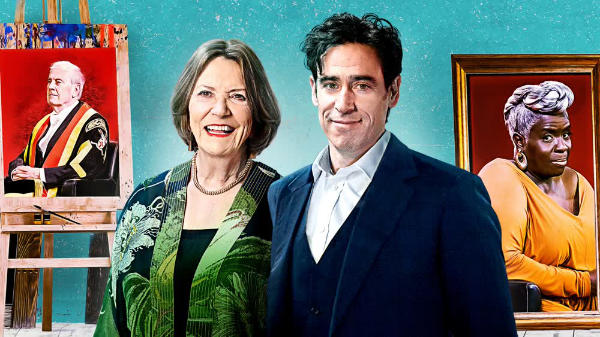
Showing posts with label art competitions. Show all posts

Saturday, February 07, 2026

LAST CALL FOR ENTRIES: Jackson's Art Prize 2026

The deadline for entries for Jackson's Art Prize 2026 is 2nd March 2020 (5pm).

This post looks at Jackson’s Painting Prize 2026 and, in summary
  • who can enter
  • what you can enter
  • why enter
  • how to enter (registration / timeline / digital images etc)

Call for Entries: Jackson's Art Prize 2026


The intentions behind the Jackson's Art Prize are:
  • to bring together a global community of creatives and
  • showcase the work of artists of all ages and abilities.
The annual award welcomes 
  • entries in all two-dimensional media including painting, drawing, and original printmaking 
  • from amateur to professional artists.
There are lots of prizes - which are mainly art materials, although there is a £6,000 cash first prize.


Who can enter

  • Open internationally to artists of all ages and abilities

What type of artwork can you enter?

  • Artworks created in two-dimensional mediums eg painting, drawing, printmaking
  • About any theme or subject matter
  • Artworks for the competition must be submitted by the artist who created it. 
  • All work must be your own intellectual property. 

This is what the competition does not accept
  • Three-dimensional or sculptural work
  • Digital, computer manipulated, or AI art
  • Pure photography
  • Digital prints e.g. giclée
  • Artworks of an inappropriate or offensive subject matter will be removed from the competition.
  • artworks that directly copy other people’s work (this does not include artistic interpretations) or works that are made from a tutorial.
There will, of course, be some silly idiot who will think it's OK to try and smuggle some AI artwork in. Personally I'd award a "Great Big Wally" Award to anybody who did so and name and shame on social media.

You can see past entries and winners on the Jackson's Art Prize Instagram account 

The quality of the photograph of the artwork


Wednesday, April 23, 2025

The Turner Prize Shortlist 2025 begs a question

Today is Turner's 250th Birthday. Two days ago, the artists shortlisted for Turner Prize 2025 shortlist were announced.

What is The Turner Prize?

What the Tate says - other than in this year's press release - is
The Turner Prize is awarded to a British artist. 'British' can mean an artist working primarily in Britain or an artist born in Britain working globally. The prize focuses on their recent developments in British art rather than a lifetime's achievement.
Very many well known artists - or ones who have gone on to become very well known - have won The Turner Prize in the past. You can see a list here.

The award in 2025 is £55,000
  • £25,000 goes to the winner and 
  • £10,000 each goes to the other shortlisted artists.
In the past, the prize has been criticised for having criteria which are unfocused i.e. how do they get from the vast range of contemporary art development in the UK to those artists who are shortlisted for this prize.

Can one determine purpose from those shortlisted this year?
One of the world’s best-known prizes for the visual arts, the Turner Prize aims to promote public debate around new developments in contemporary British art.
They are:
  • Nnena Kalu, 
  • Rene Matić, 
  • Mohammed Sami and 
  • Zadie Xa.
Nnena Kalu, Conversations, Walker Art Gallery, installation view.
Courtesy of the Artist and Walker Art Gallery, Liverpool.
Photo credit: Pete Carr.
the unveiling of the short list often occasions a fierce debate about the artists’ relative merits and sometimes about the very definition of art. 
My initial inclination is to think somebody is trying to make a point. Which is all art needs to have a message. 

I don't think it does. I think art can be very many things. What it emphatically does not ALWAYS need to be is something with "a message" - and yet this is what jurors always seem to like.

In 2025, art seems to have become something which can only be celebrated if the artist is marginalised in some way - in terms of heritage or gender or ethnicity. Maybe this is connected to the fact that this year the Turner Prize is associated with Bradford as the City of Culture - and one might expect some sort of respect for the diverse communities that live in Bradford. 

But should it reflect just one city or the nation as a whole?

Of very great and increasing concern to me is that art favoured by jurors often seems NOT to connect in any way with vast numbers of the British public.
In turn, this can then be exploited by extreme right wing political parties which leads to increasing numbers of people voting for them. That way lies fascism and all that goes with that - as we are seeing playing out right now in the USA. That is very much NOT the way I want to see the UK go.

I'm also left wondering if the jurors selected their four shortlisted artists before or after this headline from the Evening Standard - Visitor numbers plunge at London art museums as Tate galleries lose 2.7 million in five years (25th March 2025) - which really shocked me! (There will be another blog post on this topic and why numbers have dropped - which is pertinent to my comments above).

But who decides?

It seems to me that which artistic developments get noticed rather depends on who is judging the prize - and which organisations they are associated with. 

This year the members of the Turner Prize 2025 jury are:

Monday, January 20, 2025

What was your first art competition?

I've just finished writing an article for The Artist about an art competition/exhibition that I'm particularly familiar with (of which more at a later date this year).

It made me wonder what makes people enter art competitions. 

I know a lot of people find them very scary - which is one of the reasons why I write "calls for entries" posts to demystify some of the aspects which frighten people.

My first art competition

I then remembered that I won an art competition I didn't even know I had entered. However I was six at the time! 

That's a great way not to get nervous!

This very fine painting of a Squirrel enjoying a nut while sat on the branch of a tree with lots of smaller branches won my age group in a competition run by the Hale National Savings Committee. Children were asked to develop a painting based on the word "Saving".

I think the idea was to introduce children to a good habit and maybe get some artwork for use in promoting savings in the area! I've got a feeling my painting went on to the national finals.

I won first prize in an art competition in 1960 - age 6.

The odd thing is I have a very clear memory of the infants classroom in which I created the painting - and how much my teacher liked it. 

I can remember virtually nothing of my infant school days - apart from doing this painting.

Which is, of course, the other great thing about paintings. They help you remember where and when you painted it. 

Drawing development in children


See also this post from the archive about Drawing development in children (courtesy of the Wayback Machine - because the original website is no longer online)

It included a reference to this excellent website about drawing development in children developed by Susan K Donley

This says that age 6, the child arrives at The schematic stage

The child arrives at a "schema," a definite way of portraying an object, although it will be modified when he needs to portray something important. The schema represents the child's active knowledge of the subject. At this stage, there is definite order in space relationships: everything sits on the base line.
I think, despite being 6, I had gone past that stage. The next one is described below

The gang stage: The dawning realism
The child finds that schematic generalization no longer suffices to express reality. This dawning of how things really look is usually expressed with more detail for individual parts, but is far from naturalism in drawing. Space is discovered and depicted with overlapping objects in drawings and a horizon line rather than a base line. Children begin to compare their work and become more critical of it. While they are more independent of adults, they are more anxious to conform to their peers.
I've definitely got overlapping objects!

By way of contrast, Betty Edwards perspective on the 6 year old was as follows 

The Landscape

By five or six, children develop a set of symbols to create a landscape that eventually becomes a single variation repeated endlessly. A blue line and sun at the top of the page and a green line at the bottom become symbolic representations of the sky and ground. Landscapes are compose carefully, giving the impression that removing any single form would throw off the balance of the whole picture.
followed by, age 8

The stage of complexity

At nine or ten years, children try for more detail, hoping to achieve greater realism, a prized goal. Concern for where things are in their drawings is replaced by concern for how things look-- particularly tanks, dinosaurs, super heroes, etc. for boys; models, horses, landscapes, etc. for girls.


Monday, March 25, 2024

Does AI mean Open Exhibitions / Art Competitions need to rethink digital entries?


Last week I reshared a post on Facebook (see below) which highlighted how many images are now created using "artificial intelligence" aka AI. 

It occurred to me that ALL those organising open exhibitions and/or art competitions MUST now to factor the proliferation of AI into 
  • the calls for entries
  • the rules and regulations
  • the submission process
  • the vetting process
  • the judging process
  • plus briefings on legal decisions for all those in charge
It simply will NOT be acceptable for all entries to be judged on digital images - only to find that a selected entry is a digital print when it arrives for exhibition.

Below I remind organisers of open exhibitions by art societies and art competitions of things they need to think about
  • starting with a very salutary lesson in what happens when you get it wrong - see The AWS Gold Medal Controversy (2008-2010)
  • a reminder about normal challenges for organisers in relation to copyright
  • some initial thoughts on the implications for art competitions and open exhibitions - by way of a checklist!


The AWS Gold Medal Controversy

Unfortunately, the Gold Medal winning painting in the 2008 exhibition, “Impermanence” by Sheryl Luxenburg has generated a huge volume of controversy. In question are the ownership of the image, the originality of the piece and even the authenticity of the medium. Many have questioned the American Watercolor Society's position on this problem and wondered in their communications to us whether our society is taking these questions seriously. Statement in 2008 by the AWS
Should anybody need reminding - here's the link to my post about the debacle at the American Watercolour Society about an "artwork" which won a Gold Medal . 
Was the gold medal winning painting at the centre of the American Watercolor Society controversy actually painted - or was it a giclee print?
See below for links to posts in September 2008 about the AWS Gold medal controversy - in reverse order of posting

Friday, October 06, 2023

Is a minimum price for artwork in open art exhibitions necessary?

This post argues that the use of a MINIMUM price for artwork entries for an OPEN art exhibition/competition needs to be ELIMINATED.

In my view, any use of a MINIMUM price for artwork entries for an OPEN art exhibition/competition needs to have 
  • a clear and cogent business purpose - based on facts and not assumptions
  • which generates positive results i.e. more income not less
  • produces better value than no minimum sale price!
READ ON:  My investigations to date have produced no good reason for the use of a minimum price - and even less for raising it above the affordable art level if it is used!

PS. If you want to know why I write about the money side of art a lot, you might want to look at my background.


The Open Art Exhibition / Competition


The basic business premise of an open art exhibition / competition  is that it aims to
  • attract lots of entries - and thereby generate funds via entry fees 
  • get lots of good calibre art entered
  • select art which is good AND is priced to appeal to buyers
  • which sells well - and thereby generates funds from sales 
  • which means more exhibitions next year!
However it cannot just be about wishful thinking.

Generating sales at an open exhibition/competition needs to be focused on:
Generating funds is about:
  • covering the direct costs of the this year's exhibition
  • making sure next year's exhibition can take place i.e. creating a reserve for expenses related to running next year's open exhibition - many of which need an outlay in advance of the exhibition opening
  • contributing to the overheads of running the organisation / art gallery / competition etc
  • making money for the artists 
  • paying taxes!
What the exact business model is varies according to every open exhibition, its organiser and their business aims and financial / budgeting expertise.

So it's worth looking at what currently happens....

Specifically in relation to the concept of "the minimum price" for art entered into an art exhibition / competition.

What is a minimum price?


Very simply, SOME open exhibitions or art competitions require that art entered must be priced at or above a minimum specified price.

However, this is NOT a rule. It is NOT required. It is an OPTION.

I've rewritten this blog post a number of times. It keeps foundering on trying to define any sort of rationale for a minimum price - of which more below.

Who uses a minimum price for art in an open art exhibition/competition?


A number of open art exhibitions stipulate a minimum price for artwork entered into open art exhibitions. 

BUT NOT ALL DOBelow I've identified whether or not art competitions and open exhibitions use a minimum price

ABSOLUTELY NO MINIMUM PRICE

Tuesday, February 14, 2023

Call for Entries: John Moores Painting Prize 2023


The John Moores Painting Prize is a very prestigious biennial PAINTING competition - with a £25,000 First Prize - plus a £5,000 prize for an emerging artist.
  • It opened for entries for the 2023 exhibition yesterday.
  • The Prize is open to all UK-based artists working with paint.
  • The deadline for an entry is 24 March 2023
  • All entries are judged anonymously over a two-stage selection process - but I strongly recommend you take a look at the Judges profiles first.
  • It culminates in an exhibition next year at the Walker Art Gallery in Liverpool (16 September 2023 to 25 February 2024).
In the absence of all those art competitions which have fallen by the wayside in recent years, this is one art competition that all painters should take very seriously - not least because who has won it previously

Exhibition

The John Moores Painting Prize (JSPP) 2023 Exhibition will be on display at the Walker Art Gallery in Liverpool from 19 September 2020 - 14 February 2021

Kathryn Maple - who won the JSPP in 2020 - also has an exhibition Under a Hot Sun by Kathryn Maple at the Walker Art Gallery between 11 Feb 2023—30 Apr 2023


About the John Moores Painting Prize

The John Moores Painting Prize has awarded more than £685,000 in prize money across 31 exhibitions, which have showcased more than 2,350 works of art. It presents a rich history of post-war painting in Britain. The first exhibition was held only six years after the Walker Art Gallery re-opened following the Second World War.

Previous winners of the John Moores Painting Prize have included artists such as


Aims of the JMPP

The competition is named after the sponsor of the prize, Sir John Moores (1896 – 1993). It was originally intended as a one-off, however it's now a biennial event and this will be the 32nd exhibition since its launch in 1957.
The original aims of the John Moores Painting Prize was:
'To give Merseyside the chance to see an exhibition of painting and sculpture embracing the best and most vital work being done today throughout the country'
and
'To encourage contemporary artists, particularly the young and progressive'
Now the aim is
Supporting artists from all over the UK – whether they’re undiscovered, emerging or established in their careers – the prize provides a platform for artists to inspire, disrupt and challenge the British painting art scene today.
Hence the competition aims to support artists who paint with two important dimensions:
  • all entries are judged anonymously
  • to bring to Liverpool "the best contemporary painting" from across the UK
and after that it's whatever the members of the jury care to place an emphasis on.

In terms of "anonymous entry and judging" this competition is much more thorough than most. During the Stage 1 Review of the digital images the process is completely anonymous
  • all artists are allocated a unique entry number
  • jurors are not given the names of the artists
  • jurors are only provided with information about the title, size and medium of the painting.
You can read more about the The Judges for the 2023 JMPP at the end of this post.

Prizes


All paintings included in the exhibition are eligible for a prize. The jury will select a final shortlist of five paintings and award the prizes.
  • The first prize winner will receive £25,000 and a solo display at the Walker Art Gallery in 2025. 
  • A shortlist of four other paintings will also be awarded £2,500.  
  • Plus a NEW £5,000 Lady Grantchester Prize for emerging artists (see below) PLUS 
    • a month-long residency and display space at Elephant West in West London  plus local accommodation and a basic allowance if the artist lives outside LondoN; and 
    • £2,500 worth of art materials from Winsor & Newton.
    • Professional mentoring by Winsor & Newton
  • The Visitors’ Choice Award (worth £2023) sponsored by Rathbones. - Visitors to the  JMPP 2023 exhibition will be invited to vote for their favourite painting to win the popular 
New for the 2023 edition of JMPP, the Emerging Artist Prize has been re-named in honour of the late Lady Grantchester, an avid and loyal supporter of the John Moores Painting Prize, which was created by her father, John Moores in 1957.

The Lady Grantchester Prize is open to recent graduates, who are within two years of graduation, and students who are currently in their final year of a UK-based arts-related course, degree (eg. BA, MA, PhD) or alternative learning programme. 


Call for Entries


Summary of information provided by the organisers can be found on


Above is the short version. Below are the details.

Who can enter?

The last edition of the show had almost 3,000 entries including works by both established and early career artists.

Artists MUST be:

Tuesday, September 27, 2022

Portrait Artist of the Year (Series 9) starts 5th October 2022

I'm sure many of you will be delighted to hear that Series 9 of Portrait Artist of the Year (#PAOTY) starts on our screens - on the Sky Arts Channel (Channel 11 on Freeview) next week!

When to Watch

The first episode will be broadcast on Wednesday 5th October - when the celebrity sitters will be Elizabeth Day, Khadija Mellah and Nick Grimshaw.

The Sky TV link says the broadcast time is 3pm(!) - but I'm guessing either that's a mistake or it will have repeat broadcast times.

This is followed by six more heats - every Wednesday up until 16th November - giving us a total of seven artists for the semi-finals. I wonder if they'll have a wildcard. I've often thought that it's a great pity when a heat as two great artists but only one can go through.....

Then 

  • the Semi Finals are on 23rd November
  • The Finals are on 30th November
  • The Commission Programme is on 7th December
As usual it will be hosted by Joan Bakewell and Stephen Mangan (below) and the Judges will be 

Watch out for my reviews


As usual, I'll be writing a review of the episode and publishing it within a couple of days of the broadcast - normally the next day.

You can read previous reviews at the bottom of this post. 

My reviews of each of the Heats cover:
  • the artists - with links to their websites and social media
  • the sitters
  • themes from the episode
  • reasons for shortlisting
  • shortlisted artists
  • who won

If you are a participating artist and want to make sure I've got your correct website URL and social media links please contact me via the email address on this page and tell me which heat you're in. (No timewasters please).

and get an email to your inbox every time I publish


I'm thinking of creating a checklist for myself from previous themes in previous years to see which are the most common!

I'm also looking out for those announcing their involved online - to give myself a head start on their profiles.


Reviews & Learning Points (PAOTY Series 5-8)


Series 8 of PORTRAIT ARTIST OF THE YEAR (Autumn 2021)


Series 7 of PORTRAIT ARTIST OF THE YEAR (Autumn 2020)


Series 6 of PORTRAIT ARTIST OF THE YEAR (Winter/Spring 2019)


Series 5 of PORTRAIT ARTIST OF THE YEAR (Winter / Spring 2018)


Series 4 of PORTRAIT ARTIST OF THE YEAR


Tuesday, July 12, 2022

How to assess entries for an open art society exhibition (Part 2) - marking artwork

Today's Part 2 of my focus on assessing entries for an open art society exhibition is going to focus on a method I've devised for giving every entry in an open exhibition a specific mark.

Yesterday I wrote about How to assess entries for an open art society exhibition (Part 1) which focused on the increased use of digital selection following the introduction of digital submissions and, in particular, the pandemic

The rationale behind a marking system

I have 100 marks to award to each of a very considerable number of artworks. 

The challenge for me is to 

  • make the allocation of marks make sense to me 
  • try and achieve consistency across all entries during the time required to mark each one
  • ensure the marking is fair i.e. that each and every artwork ends up being ranked "correctly" in terms of my views of the relative merits of the different artworks
So how best to do this? 

My marking system

Monday, July 11, 2022

How to assess entries for an open art society exhibition (Part 1)

I think very many people might be surprised by how entries for an art exhibition get assessed by most art societies. 

I've written on this topic before in The agony and the ecstasy of art competition judging - which comments on the time involved in reviewing and judging 15,000 entries for the RA Summer Exhibition

This post comments on how the pandemic has influenced how artwork now gets judged.

How entries for open art exhibitions get assessed

In person versus digital

Traditionally, the practice has been to convene a selection panel which sits in a room as handlers bring artwork past. The speed with which the artwork moves depends on how many entries have been received and how much time has been allocated to the selection process. Bottom line it's not long.

Then we began to have digital entry - and selection of entries started to have a digital element to the process. Often with the "first cut" being done via digital assessment of the images submitted by artists, and then final assessment being made by a panel from the "longlist".

During the pandemic, efforts were made to keep annual exhibitions going and many switched to selection being wholly digital and online - and virtual exhibitions.

Interesting aspects of digital selection is that 

  • Selectors will assess much more on the basis of what they as individuals think 
  • "groupthink" is instantly eliminated (assuming no discussion between selectors). 
  • Selectors will spend the amount of time they think they need to spend on selection. It's unlikely to be identical and there may be extremes.
A big benefit of digital selection is that
  • it cuts expenses for art societies dramatically - given there is no need to reimburse people for travel to get to places where artwork is being judged. These expenses can be significant for national art societies and can be a welcome saving.
  • once experienced, you need to come up with a very good reason to go back to being in front of the art to sift out the "no hopers" and "not quite good enough"

HOWEVER The main problems with digital assessment are:
  • people who don't read instructions and submit images which are too small. They're an automatic "fail" in my book as I can't assess an image which is too small.
  • people who digitally manipulate their images to make them look better than they are in reality. This typically affects colour and/or tone. It is possible to detect images where this has happened. Or at least I know how.... ;)
  • It's really difficult to get a sense of the size of the work. I have to make an effort to check dimensions when assessing. Anybody who fails to provide dimensions end up leaning towards a a fail for me.


Sift and sort or mark and grade?

Then there's the issue of how much effort you put into decision-making

Tuesday, November 09, 2021

Call for Entries: Derwent Art Prize 2022

The 6th Derwent Art Prize is a major INTERNATIONAL art competition for artists working in dry media - and is now open for entries. 

Deadline for entries is Tuesday 4 January 2022 (5pm GMT)

Below you can find out about this major art prize, the prizes on offer in 2022, the selectors and the exhibition and, most importantly how the call for Entries works

The Derwent Art Prize was conceived in 2012 and aims to reward excellence by showcasing the very best artworks created in pencil by artists from around the world.
The Derwent Art Prize is a global art competition with a prize pot of some £12,500. 
The exhibition was conceived in 2012 and has been consistently sponsored by Derwent, the internationally renowned fine art brand since that date. It is
  • A Biennial Open Exhibition
  • Open to artists from around the world; and 
  • Rewards excellence by showcasing the very best 2D & 3D artworks created in pencil or coloured pencil, pastels, graphite and charcoal.
Last time, this exhibition was held in 2020, there were:
  • 4,756 entries 
  • submitted by 1,884 artists 
  • from 72 different countries. 
  • The Derwent Art Prize judges selected a shortlist of 70 pieces.

The last Derwent Art Prize exhibition in a gallery - at the Mall Galleries in 2018


The Prizes


CONGRATULATIONS TO DERWENT for maintaining the prize fund in an era when many commercial / organisational sponsors have been turning their faces to the wall and leaving formerly prestigious art prizes to disappear.

I also like the fact that the main prize fund pot is equally split across 
  • all entrants and 
  • those aged 25 years and under.
Derwent Art Prizewinners with Selectors in 2016

Prizes valued at £12,500 will be awarded to entries selected for the exhibition at the Private View at the Exhibition at the Gallery@OXO, London.

A total prize fund of £12,500 will be awarded. Prizes are as follows:
  • Derwent Art Prize (£6,000)
    • First Prize £4,000 plus a year’s supply of Derwent products**
    • Second Prize £2,000
  • Young Artist Prize - for artists under 25 years (£6,000)
    • Young Artist First Prize (For artists under 25 years) £4,000 *
    • Young Artist Second Prize (For artists under 25 years) £2,000
  • People’s Choice Award £500
All the First and Second prize winners will also receive a special box of Derwent Lightfast Pencils which have a core which is resistant to prolonged colour change- meaning artwork hung in archival/museum conditions will not fade for up to 100 years.


The Selectors


This year’s entries will be judged by a panel of selectors comprising an artist, a critic and a curator. a fourth Judge is to be announced.

Writing and speaking about art history in an accessible and fun manner, my goal is to readdress the gender imbalance in the art world by reinserting women back into the canon of art history.
he has worked for more than twenty years in the art world in senior roles for the Contemporary Art Society, The Showroom, the Serpentine Gallery, and Royal Academy of Arts in London. He has been Director of Modern Art Oxford since 2013.
Her work is concerned with what she calls ‘memory stories’. She creates these stories primarily through research connected to the African Caribbean diaspora, and then maps the stories onto life sized figures. 

The Exhibition


From the open submission applications the panel will select approximately 80 works for exhibition.

At the bottom of the page you can find my previous reviews of this art competition, the prizewinners and the exhibitions - and see the diverse range of artwork which has been selected in the last eight years. 

The exhibition will be held at Gallery@OXO in central London will be from 24 February – 6 March 2022.
This is situated on the Riverside Walkway at the heart of one of the richest cultural areas of London, between the London Eye, The Hayward Gallery and Tate Modern.


How to enter the Derwent Art Prize


Who can enter

Entries are invited from international artists

What can you enter

Artists may only enter once, with a maximum of 6 images.

Wednesday, October 13, 2021

How Portrait Artist of the Year actually works in practice

I was looking back at my previous posts and noticed how much of the Episode 1 post I've done for every series of Portrait Artist of the Year I've reviewed was taken up with explaining how this competitions works - so this year I've decided to do a preliminary post!

This looks at how it all works - in principle and what it's really like in practice! Those inspired by the programme to apply for the series next year 

Plus this is your countdown reminder that the programme starts in a few hours at 8pm on Wednesday 13th October!

Bottom line - it's classic cold dark evening in Autumn viewing!


How this competition works - in principle

Major fans can skip this but - but for the new to the programme - this is how it works.

The programme / series

  • The Sky Arts Portrait Artist of the Year competition is now one of the most important art competitions in the UK since the demise of a number of the other art competitions with significant prizes
  • It has been running for several years and this is the eighth series
  • The winner gets a major prize - a commission worth £10,000 - to paint the portrait of a major celebrity.
  • There are three well known sitters for each heat. Sitters are young and older "celebrities" of varying degrees of recognition - as in I don't recognise a number of the names this year. You'll do better than me if you've caught up with all the series on Sky and Netflix!
  • The series is very popular with lots of aspiring portrait artists of various ages - not least because it offers the opportunity for an enhanced profile i.e. it helps marketing if nothing else - so long as you acquit yourself well!
  • It also attracts artists who already have an established careers as artists and in some cases are well known and collectable portrait artists. Interestingly a number of more established artists shy away from it because they can't cope with the constraints - see below......

Portrait Artist of the Year is 

  • commissioned by Sky TV UK 
  • made by Storyvault Films an independent production company.
  • broadcast every Autumn - generally starting in October - by Sky Arts Channel on digital television (now also on Freeview) and via the NOW TV app.

The Judges


The judges include leading figures in the art world - who are the same as for previous series:
  • award-winning portrait painter Tai Shan SchierenbergHe studied at St. Martin's School of Art and at The Slade. He lives and works in London, Norfolk and the Black Forest in Germany and has artwork in a number of important national and regional public collections
  • independent curator, art historian and arts broadcaster Kathleen Soriano worked in museums and galleries for over 30 years. Currently Chair of the Board of Trustees of the Liverpool Biennial, Trustee of Art UK and was previously Director of Exhibitions at the Royal Academy of Arts and Head of Exhibitions & Collections at the National Portrait Gallery.
  • arts broadcaster, curator, mentor and writer Kate Bryan is also currently Head of Collections for Soho House. In 2020 she started to present a new series for Sky Arts exploring exhibitions across the U.K called 'Inside Arts'. She is also the author of:
#AD NOTE: I am an Amazon affiliate and links to the above books include link to my personal affiliate account. This means that if you buy a book as a result of clicking on one of these links I earn a very small sum. (Income earned in this way helps me finance this blog).

How each episode works


Each episode has three sitters and nine artists (three per sitter), three judges and two presenters.

The interior of Battersea Arts Centre - with one of the segments and easels and kit set-up
  • Heats are now held at Battersea Arts Centre - and, in normal times, you can view the programmes being made - as I have done.
  • Each of the three artists is seated in one of three sections of a rotunda type frame (think three segments of a pie or cake). There's no choice as to who paints which sitter - and no choice as to what angle you get on the sitter
  • Artists have - in theory - four hours to complete a portrait working from a live model - with a break in the middle of the day.
  • None of the artists know who their sitter will is until they arrive in the room. (TADAAA!)
  • Filming generally takes place in April.

What it's really like in practice


Reality is never quite what it looks like on screen
, so I've made a point over the years I've been reviewing this series (I was a latecomer!) of:
  • searching for blog posts by those taking part and 
  • asking people I met who participated what it was really like.  
Plus when I could be present I've photographed the reality - which, of course, is very different to what it looks like on screen.

For example, this is my album of photos of the Sky Arts Portrait Artist of the Year 2019 FINAL
This is what the Final actually looks like in the room where it is filmed - and this is what the artists have to contend with on top of painting a portrait live in four hours!
I've been writing about how the programme works in reality and relaying tips and insight from participants in previous posts. (You can read through them all below!)

Here are some of the more important ones

Tuesday, July 20, 2021

Count the number of art competitions that no longer exist....

The only thing that is certain in this world is "change".

Which is why, one of the things that is certain in the art world is that art competitions change over time.

What's surprising me right now is just how many of the more major competitions in the UK have completely disappeared in recent time. 

  • I last wrote about this prior to lockdown back in early 2020 in The Disappearing Art Competitions 
  • Since when we've had confirmation more have been lost and the art competition 'maketplace' has changed significantly in the UK.

I thought it was time for AN UPDATE. Below I list those art competitions

  • which will not be taking place in 2021
  • which still exist and will take place
  • those replacing past competitions
  • minor art competions

plus why art competitions are important to artists.

By way of a preamble, I am absolutely convinced this is all about two things:

FIRST we're still experiencing coronavirus interruptus syndrome, i.e. the very long "stall" associated with not knowing when things are going to get back to normal. Right now I don't expect thing to approach normal until 2022 - but I do also expect people to be planning for this right now!

SECOND there is an absolute DEARTH of key components for a prestigious art competition. These are:

  • key people whose networks enable them to prize out sponsorship money from corporate bodies which can afford it
  • strategic thinking within some regional museums - in relation to the traffic which can be generated by a good art competition
  • organisations which want to be associated with significant art prizes.
  • organisations with expertise and practical experience in developing efficient and effective art competitions with significant prizes (i.e. why are we losing all these top art competitions?)

By way of contrast, I am also noticing that some national art societies are getting very good at generating / replacing very good levels of sponsorship for prizes for their open exhibitions.  

  • I now highlight clearly those national art societies which people should take a close look at on the basis of prize money alone.
  • This should make artists think about whether they are applying for the right  open exhibitions!  PROMPT to my recent client: this is what I was talking about! :)

Art Competitions that no longer exist in 2021

BP Portrait Award

The last BP Portrait exhibition in the NP

Wednesday, September 16, 2020

Call for Entries: Virtual ING Discerning Eye 2020

The deadline for the call for entries for the brand new version of the ING Discerning Eye in 2020 is 1st October.

This post highlights what is the same and what is different in 2020 and - in the absence of lots of things to say about submitting art - I've turned this call for entries into a bit of a profile of the selectors!


since our first exhibition in 1990 - over thirteen thousand works by about four thousand artists.


What stays the same in 2020

The ING Discerning Eye Exhibition in 2020 will:
  • include only works constrained by size i.e. only small works are permitted (it must be less than 20 inches (50cm) in its greatest dimension.)
  • which MUST be an original creation by the artist
  • comprise works independently selected by six prominent figures from different areas of the art world
    • two artists,
    • two collectors and
    • two critics
  • each selector is solely responsible for their own selection
  • be OPEN to all artists resident in the UK
  • can submit up to six original works
  • all artwork MUST be for sale

Plus the Call For Entries site will be via ArtOpps


What will be different in 2020

For the first time in its history, this year's edition of the ING Discerning Eye will be held 100% virtually, helping artists display their work online! Now more than ever, the ING Discerning Eye is committed to helping artists increase their visibility among peers and collectors and to giving creatives a platform to grow.

  • The Selection will be entirely DIGITAL
  • each selector's chosen works will comprise at least 25% from the open entry. AT LAST!  A statement about percentages! (i.e. this exhibition may have always been open entry however it was very questionable whether the open entry was funding an exhibition by selectors' luvvies. Some selectors in the past have been utterly shameless in the past about selecting work by friends or people they have taught - and I have been repeatedly very critical of the lack of transparency which for me has verged on the legally doubtful!)
  • the Exhibition will be VIRTUAL - rather than at the Mall Galleries, In this context it's following in the footsteps of the Lynn-Painter Stainers Competition - which this year has decided to go online minus prizes plus all proceeds to charities supported.
  • the virtual exhibition will be LONGER - from 19 November until 31 December 2020 - and will be available 24/7 during that period for all those interested in viewing and/or purchasing artworks.
  • All exhibiting artists will be included in a fully illustrated print catalogue - which is a first!

The Prizes

Prizes selected by the Prize Givers

  • ING Purchase Prize* – £5000
  • Meynell Fenton Prize* – £1000
  • Humphreys Purchase Prize* – £750
  • Parker Harris Mentoring Prize*: Parker Harris will give a one-to-one mentoring session covering all aspects of professional development to a selected artist.

Prizes are selected by members of the Discerning Eye Educational Board

  • The Discerning Eye Founder’s Purchase Prize (In honour of Michael Reynolds) £2500
  • The Discerning Eye Chairman’s Purchase Prize – £1000
  • Discerning Eye Sculpture and 3D Work Prize – £250
  • Discerning Eye Original Print Prize – £250
  • Regional Prizes – Up to 8 prizes of £250 each awarded to an outstanding entry from the national regions

The Selectors

Tuesday, July 14, 2020

What is an emerging artist?

what is an emerging artist?
Do you know the definition of an emerging artist?

"Emerging artist" is a term which is often used by various art competitions which, one would like to think, are serious about helping to develop the careers of those who are starting out and beginning to 'make their mark' and be recognised.

Today's post was prompted by a message sent to me via Facebook by an artist querying the definition of an emerging artist. It struck me that:
  • a lot of would-be artists are confused by the term "emerging artist"
  • I know a lot of people get puzzled about who/why certain people get selected for competitions
  • The points worth making probably would benefit from a wider audience than just the young lady who asked the question
So first the question, then my view as to the definition plus other views on the definition and finally some comments about art competitions.

The Question


Hello Katherine,  
First of all, thank you so much for creating Making a Mark - it's such a valuable resource for all artists!  
I actually wanted to seek your thoughts on something I noticed in the world of art competitions as it seemed a bit odd. 
Recently, a UK competition titled "[sponsor name] Emerging [deleted] Painter Prize" announced its finalists, and I was surprised to see that amongst those selected was an artist who has in fact been practicing art for at least a decade and gotten a major commission (for the Olympics back in 2012) as well as winning first prize at major international art competitions in previous years (these were not geared towards emerging artists). 
I'm still new to the world of art competitions so I was wondering if this is the norm, where clearly well-established artists are generally accepted as fair game at such emerging artist competitions? I understand that all competitions value quality, and in that sense those with years of experience would have an advantage over emerging artists. But to my mind, these competitions (especially if titled as such) are aimed to spotlighting artists who are relatively inexperienced and could really benefit from some extra attention on their work.  
If in your experience as a critic/judge/curator, the above situation (established artist selected in emerging artist competition) is in fact quite acceptable, then perhaps it is I who need to adjust my thinking about art competitions for emerging artists. I really hope you can offer some thoughts on this.  
Thank you in advance! 

Warm regards etc
I comment further about this particular competition - and how it fails emerging artists at the end of this blog post. 

DEFINITION: What is an emerging artist?


My definition


Here's my definition of an emerging artist. (E) means essential; (F) indicates happens frequently
An emerging artist:
  • aims to be professional artist - having gone well beyond 'hobby artist' status while not yet an 'established' or 'mid-career' artist (E)
  • is committed to his/her practice and has worked seriously over the last 5 years (or less) to develop and promote a career as a professional artist  (E)    
  • has developed an original body of work with a clear identity and/or one (or more) theme(s) (E) 
  • is not defined by age - because people develop second careers and take up art at various ages (E) 
  • demonstrates potential AND has had some notable success - in terms of sales or awards/prizes and/or getting their art noticed and/or selected for significant exhibitions (E) 
  • has a career on an upward trajectory (E)
  • may operate on a semi-professional basis - but has another job which helps pay the bills (F) 
  • graduated with an art degree within the last five years (F)

I require emerging artists to have demonstrated some level of success because otherwise they are what I call "aspiring artists". Some might call them "wannabes". (Think 98% of the people who turn up on TV talent shows)

An "established artist" for me (in the UK) is no longer "new" and has gone beyond "emerging". He or she is somebody who has been writing "Artist" as their main or one of their main occupational activities on their self-assessment tax return for 5 years or more AND paying tax and Class 2 National Insurance from their profits (i.e. because they're generating enough profit to be required to do so - because people have recognised value in what they do).

If you're not doing either then from my perspective you may well be an 'aspiring' or 'hobby' artist.  (However see below for what others have to say on this topic!)

A "new artist" / one just starting out is also to me distinct from "emerging" in that
  • there's LOTS of artists who are new to competitions and the art market - 
  • but very few will become recognised as "emerging artists" (according to my definition) and 
  • even fewer will become "established artists".
One might debate the number of years. I have a very clear view as to why I use 5 years as a benchmark. In my opinion, if - within five years - you're
  • NOT making some significant progress in creating a unique identity and body of work 
  • NOT getting noticed 
I'd begin to doubt whether you ever will or whether you really want to be an artist as a career.

Some other definitions


Here are some others who have commented on what an emerging artist is