Showing posts with label animal art. Show all posts

Friday, September 11, 2026

Wildife Artist of the Year 2026 - Winners


I've now got all the names of those who won their categories - plus, of course, the overall winner and the runner up (which I did know).

  • All quotations come from the Wildlife Artist of the Year and/or website unless otherwise stated.
  • I'm assuming the description of the art is by the artist (until anybody tells me otherwise)
  • I'm going to use the text provided to me by the David Shepherd Foundation as to the Judges' reasons why an artwork won an award
  • Plus some of the pics come from the dswfwildart Instagram account
  • the rest are my pics.
The judging panel is made up of art professionals, artists and conservationists.

Note: I only do this for long-running and prestigious art competitions which attract an international entry! That's because not everybody can get to the exhibition.


For my photos of the exhibition see an album on my Facebook Page - Wildlife Artist of the Year 2026

Overall Winner of "Wildlife Artist of the Year"

Stefano Zagaglia - Evanescence the Biggest


This brings a
  • £5,000 cash prize,
  • the official title, and
  • a £5,000 conservation donation made in the winner's name.

WINNER OF WILDLIFE ARTIST OF THE YEAR 2026
Evanescence - The Biggest
oil on canvas, 100cm x 100cm
Stefano Zagaglia

The Label in the exhibition states
The elephant slowly emerges from the white, a powerful yet fragile presence. Only a portion of Its body is visible, while the rest dissolves in the light, suggesting a presence that might vanish. The tusks, a symbol of its strength and its doom, become the focus of the gaze. A reminder of how great and majestic this species is, but also how vulnerable it is to human actions.

This was the Judges comment

"A winning artwork isn’t always the loudest. Sometimes it is the one you cannot stop looking at, and in that context the artist of this beautiful piece has presented the Elephant, our largest living land mammal whose quiet strength never needs to shout. Stefano has brilliantly embraced the subject, most importantly the category and this competition in all its glory."
- WAY 2026 Judge

About the Artist


Stefano Zagaglia's website says nothing about him except why he paints wildlife.  However 
The paint remains on the canvas as if struggling.
As if no longer certain it can remain.
It thins, surrenders to the light.
And the bodies of the animals approach the edges, dissolve.
As if suspended — between appearing and disappearing.
It’s a moment.
The moment before the end.
And perhaps, also,a last gesture.
A last attempt to hold them back.
Before they vanish completely.

Overall Runner Up 

Prizes are
  • £1,000 cash prize and
  • a £1,000 conservation donation made in the runner-up's name.


Alberto Duvivier Tembo - Extincts

Thursday, September 10, 2026

Another Excellent "Wildlife Artist of the Year" Exhibition (2026)

I've attended - and reviewed - many Wildlife Artist of the Year (WAY) exhibitions, organised by the David Shepherd Wildlife Foundation and held  at the Mall Galleries each year. 

There's lots to read below of interest to all aspiring and established wildlife artists.
  • Why visit this exhibition
  • Note for aspiring and participating artists
  • How to view the exhibition - in person and online
  • Some facts about the exhibition
  • How to view the exhibition - including links to my past reviews of this exhibition going back to 2008
TOMORROW I'm publishing a post about the Category winners.

Feature Wall in WAY 2026

However I deliberately missed the PV on Tuesday and visited on Wednesday. I found out from those who were there that it was, as I expected, absolutely packed out with people who love wildlife and wildlife art and were keen to buy good art - and it was very hot! Which is why I tend to duck PVs these days as my internal thermostat is out of whack at the moment.

The view from the stairs - lots and lots of visitors

When I got there on Wednesday morning, apart from an awful lot of red dots, I also saw an awful lot of people who were studying the artwork with enthusiasm. 

As well they might as there was lots of excellent artwork to look at.

I took a lot of photos - of all the artwork - and have uploaded most of these to an album on my Facebook Page - Wildlife Artist of the Year 2026

Below is a review of the exhibition

If I can work out the category winners I'll do another post about those. (If somebody at DSWF can send me the details that would be much appreciated. I'd assumed they'd be on the website.)

Why visit this exhibition?

The end wall
- it took a long time for me to get a clear view of this
because of the number of visitors!

For me, what is unique about this exhibition is that very many of the wildlife artists selected for the exhibition tend to be those who have "gone the extra mile" in terms of capturing innate characteristics of their subject 

Cat Crawl 
Pastel, 47cm x 40cm
Lisa Gleim AAPLF, AFC, ASMA, AWAM, CGA, IAPS/MC, PSA, SAA, SPSM

This one for example, positively jumped off the wall at me, given the acute observation of primal cat behaviour when it comes to hunting - as every domestic cat owner will recognise. That and the fact I love pastel artwork!

and/or finding a new way to convey the essence of their subject.

Three oil paintings by Stefano Zagaglia
Winner of WAY 2026
(the winning painting is on the right)
Scale: all the paintings are 100 cm x 100 cm
note the plugs bottom left for scale

I think I probably see more innovation and novel ways of representing subject matter at this exhibition than any other. It just happens to be wildlife.

Thursday, April 06, 2023

Portraits of Dogs: From Gainsborough to Hockney

Last week, I went to see the new exhibition of Portraits of Dogs: From Gainsborough to Hockney at the Wallace Collection in Marylebone.

Crop of Landseer's Laying down the Law (or Trial by Jury)

Whether you are a dog fan or not, it's a very interesting exhibition for a variety of reasons. Here are some of them:

  • the paintings in the show are exclusively portraits of dogs - no humans allowed!
  • some of the portraits are extremely impressive - on any level
  • artists included in the show include some very well known names - including some you may find surprising
  • the exhibition has an excellent narrative in terms of themes which tell the story of dog portraits over time
  • it's very well presented with good labelling
  • you get to see a well known artist trying to draw a dog - who isn't always co-operating!

Oddly, this is an exhibition which had been planned for some time - and then had to be postponed due to the Pandemic. What happened next is 

  • the Wallace Collection decided to publish the catalogue anyway (see below)
  • a huge number of people became very new owners of dogs! 
I fully expect this exhibition to be very popular and attract a lot of visitors from both old and new fans of dogs - particularly during the school holidays. I recommend all those who specialise in dog portraits to see an upsurge in interest - and they'd better go and see it to see what has prompted a commission!

General consensus seems to be it's well worth a visit which I would endorse
  • ★★★★★ 'A treat for art-lovers and dog-lovers alike' – The Telegraph
  • ★★★★ 'Charming' – The Evening Standard

About the Artists


I'd heard of most of the artists. They include:

Famous painters of animals 

  • George Stubbs (1724 - 1806) - he's best known as a painter of horses - but he's a brilliant painter of dogs too and demonstrates an excellent understanding of their anatomy. He's also a painter of dogs renowned for their bloodline.
Stubbs’s animal portraits were family records intended for personal consumption and not for great public rooms.
George Stubbs (1724-1806) Ringwood, a Brocklesby Foxhound (1792)
Oil on canvas, 100 x 126 cm
Private Collection
  • Sir Edwin Landseer (1802-1873) - a very well known painter of animals - about whom I learned something new - his use of allegory in his paintings of groups of dogs. For example, Landseer's painting Laying Down The Law (1840) satirises the legal profession through anthropomorphism. It shows a group of dogs, with a poodle symbolising the Lord ChancellorThis is one of the most celebrated dog paintings of the 19th century. It was exhibited at the Royal Academy in 1840
Edwin Landseer Laying Down the Law or Trial by Jury
one of the most popular paintings of the 19th century
In the picture Landseer uses the individual characters of the breeds of dogs to satirise various members of the legal profession. The white poodle, with the similarity of its long ears to a legal wig, parodies the pomposity of a judge.

The painting was recognised at the time as a satire on the Court of Chancery, set up to deal with common law problems such as contested wills. The endless delays in the court exhausted the finances of the litigants while enriching its lawyers, an issue memorably taken up by Charles Dickens in Bleak House.

and 

Wednesday, November 09, 2022

How one dog artist markets for commissions

How do you market commissions if you make or aim to generate most of your income from commissions?

This is a question which applies to very many artists whether they draw or paint adults, families, kids or their dogs or cats - or other creatures.

Yesterday - on my long walk around my local huge (prizewinning) park - I spotted this in The Hub Cafe.  

As a result, this post is about how one dog artist (Ryan Hodge) markets his work as an artist who produces dog portraits - and the lessons that others can learn from his exemplary marketing practices.

Woof Portraits

I also spotted several things which were, to me, obvious good practice
  • an example of the work of the artist
  • a business card which contains all the contact details
  • a QR Code (quick response) for scanning and finding out more quickly
  • good presentation of content and information - so no need to bother the cafe staff with questions
  • plus an ideal location - in the centre of major dog walking territory
I was intrigued so looked into the set-up a little more - which is why it's now getting a blog post.

I have to say the website I found is a model of good practice in terms of keeping things simple but presenting everything potential clients need to know and do in a logical way

Monday, August 08, 2022

FINAL Call for Entries: Society of Wildlife Artists Annual Exhibition 2022

You have until 12 noon on Friday 19th August to get your entries in for the Open Annual Exhibition 2022 of the Society of Wildlife Artists.

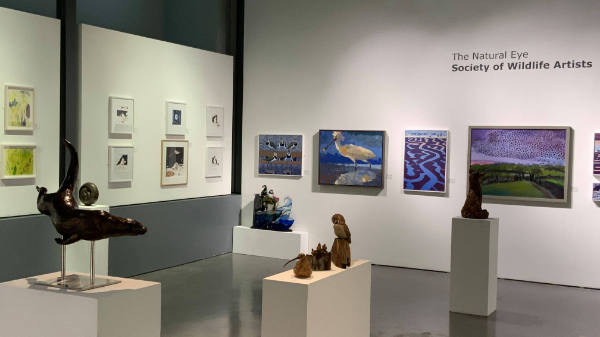
The Society of Wildlife Artists seeks to generate appreciation and delight in the natural world through all forms of fine art inspired by the world’s wildlife.
This is a very popular exhibition with a lot of art collectors who visit every year. It regularly achieves good sales from the display of c.350 original artworks from both members and non-members including paintings, drawings, original prints and sculptures.

The Natural Eye Exhibition 2021- part of the East Gallery

The Annual Exhibition is called The Natural Eye and I've always thought this neatly encapsulates two important aspects of the exhibition
  • firstly it's about very best of fine art inspired by the natural world
  • secondly, it's also about artwork which has been drawn, painted, printed or sculpted only after encounters with wildlife i.e. it's NEVER ever copied from another artist's photograph of a wild animal - and the members of the Selection Panel can tell!
The latter reason is why you won't see a lot of endangered animals or big cats which are much photographed and omnipresent in other wildlife art exhibitions.

Although art is submitted by members and artists who live all over the world, most of the artwork is typically much more focused on the wildlife in their own localities - whether on the land, in the sky or in the water - or in places they've travelled to in order to see the birds or animals.

Birds is another aspect you need to know about. This exhibition is BIG ON BIRDS!  Those who enter open wildlife art competitions will know there is a very large subset of fanatical birders who create art - and this exhibition is no exception.

View of part of the The Natural Eye 2021 in the West Gallery


Call for Entries 


Below is the "what you need to know" to send in an entry. 

ARTISTS: Who can enter

  • Any artist over 18 may submit.
  • It's is NOT restricted to artists who live/work in the UK. 
  • If you're an international artist you can submit artwork to this exhibition - but first make sure you understand that involves.

ARTWORK: What can you enter

  • Work should be 
    • based on representing the world’s wildlife and 
    • should have beencompleted within the last three years.
  • A maximum of six artworks - and if you are successful, all six will be hung!
  • All artwork must be for sale.
  • Acceptable media
    • Work may be in any medium including drawing, painting, sculpture and original prints (if prints, please detail edition and how many are available). 
    • The SWLA is keen to embrace new and innovative mediums and will accept computer-generated images as ‘original prints’. However, a digital print is only considered an original print if it was created by the artist to be realised specifically as a print. 
  • Ineligible media
    • Reproductions of paintings or photographs will not be accepted. 
    • Photographic reproductions or mechanical prints, giclée prints, etc., that are often promoted as ‘limited edition prints’ are not acceptable.
  • Inadmissible artwork
    • Work exhibited previously at Mall Galleries is not admissible.
    • Artwork which is about botanical subjects, pets and domestic animals, or decorative wares (such as vessels or tiles).
  • Artwork which will NOT be hung
    • Artworks that are poorly presented 
    • or differ significantly from the photograph entered will not be exhibited.
Some of the fine art prints in the 2021 Natural Eye Exhibition - North Gallery


ENTRIES: Deadline

  • The deadline for all online entries is 12 noon on Friday 19th August 2022
  • you need to
    • complete the online form
    • pay your submission fee
    • upload your digital image(s)

MONEY: How much does it cost to submit an entry and how should I price my art?

Monday, March 14, 2022

Call for Entries: Wildlife Artist of the Year 2022

If you're a wildlife artist and want to raise your profile you should consider entering the Wildlife Artist of the Year Competition - sponsored by the David Shepherd Wildlife Foundation is association with BBC Wildlife. The deadline for entries is 11.59pm (UK time) on the 31st March 2022.

Last year the DSWF's Wildlife Artist of the Year competition broke records with 

  • entries from 1,199 talented artists 
  • from 70 countries 
  • who submitted a total of 2,307 pieces.

This post is about:

  • the prizes
  • who can enter
  • what to enter - in the different categories
  • how to enter and the deadline
I've previously written about this competition - when it was exhibiting at the Mall Galleries - and you can read my past posts about the exhibitions at the end .

Prizes

DSWF has introduced a new emerging artist award for 2022 which celebrates first time entrants.

Prizes include 
  • Overall winner and Wildlife Artist of the Year: £10,000 (including a £5,000 conservation donation to a DSWF project of the winner’s choice), 
  • Runner-Up: £2,000 (including a £1,000 conservation donation to a DSWF project of the winner’s choice). 
  • Each of the category winners and the winner of the newcomer award will receive £500.

The Exhibition

You should note that in 2022 - as in recent years - the exhibition is virtual and artwork can no longer be seen in person.

The sale of all shortlisted artworks will be via the DSWF website (davidshepherd.org) and other virtual media. Accordingly the quality of the digital image will be critical to the selection of an entry
No allowance will be made for poor digital images, bad quality photographs or low resolution videos. 
This was the video introducing the 2021 virtual exhibition


How to enter


Categories


Entries must correspond to one of the seven categories described below.  
Detailed descriptions of each category are available in the Terms and Conditions.

Monday, December 07, 2020

Call for Entries: Jackson's Painting Prize 2021


This post looks at Jackson’s Painting Prize 2021
and
  • who can enter
  • what sort of artwork you can enter
  • why enter
  • how to enter (registration / timeline / digital images etc) 
The deadline for entries is 2nd March 2020 (5pm).
Jackson’s Painting Prize exists to recognise and appreciate original, 2-dimensional fine art works in any painting or drawing media.

So that's a painting prize in any drawing media? How about calling it an art prize?


Call for Entries for Jackson's Painting Prize

Who can enter

Any artist can enter this competition who is 
  • any age 
  • all abilities
  • any experience / educational qualifications 
  • who lives anywhere in the world
(but you or an immediate family member cannot be an employee of Jackson’s Art Supplies)
Jackson’s Painting Prize is open internationally to all artists of all abilities and at all ages.

What sort of artwork can you enter


Bear in mind this competition calls itself a PAINTING PRIZE but also allows drawing media!

You can submit up to 5 paintings
.

You can submit a collaborative artwork - but MUST make this clear on the entry form

Artworks for the competition MUST be:
  • submitted by the artist who created it (i.e. no entries by your gallery, your best friend or your mother who thinks your painting is wonderful!)
  • like the digital photo submission
  • your own intellectual property. i.e. do NOT submit any artwork that
    • either directly copies other people’s work (this does not include artistic interpretations)
    • or works that are made from a tutorial.
We take each submission and the information regarding it in good faith. We will not conduct any background checks unless we believe there are grounds for disqualification or we have been alerted by an additional party. Disclaimer
TIP: Don't be silly. I've alerted competitions before now when I know an artwork has copied the work of other people - and I know others have done so too.  Being selected is not the same as being hung - if your artwork does not meet the rules. I've known prizewinners lose prizes - and nobody needs public humiliation - so just stick to the rules and you'll be OK.

What's NOT eligible for entry to the competition


The following are not eligible for selection - even if you enter them
  • Media: Printmaking, pure photography, computer generated or manipulated artwork and 3D sculptural works 
  • Content: Drawings or paintings of an inappropriate or offensive subject matter will be removed from the competition.
  • Prizewinners: artwork that has previously won a major competition
  • Exhibited work: artwork that has been extensively exhibited in any established galleries.
  • Sold: artwork that has been sold i.e. you must have access to the original / it must be in your possession
Jackson’s Art Supplies may ask for 
  • artworks to be sent for further inspection and consideration before or outside of longlist / shortlist / prize winning selection. 
  • a physical viewing of the winning work to be available for viewing which MUST be like the digital photo submission.
  • a photograph of you standing next to your painting.
If you want to gauge whether or not your artwork is suitable for this painting competition......

Wednesday, April 08, 2020

Jackson's Painting Prize 2020 - time to vote

The shortlist for the £5,000 Jackson's Painting Prize was announced yesterday.

The Longlist


The Jackson's Painting Prize received 5,634 entries. 
  • Jacksons then created a longlist which comprised 445 artworks.
  • It was interesting to see how the number of works split between the different categories
Jacksons's Painting Prize 2020:
Number of artworks longlisted within each category of entries

Competition between entries is particularly intense within paintings of 'scapes and figures - both of which numbers over a 100 longlisted entries.

Timeline for Voting and Prizes


  • Category Winners are announced on 14th April
  • Voting for the People's Award (£1,000) - see below - closes in a week's time at 3pm on 15th April 
  • Emerging Artist and People's Choice Award announced on 17th April 
  • Jackson's Painting Prize Winner (£5,000) announced on 21st April

The Shortlist


36 of the 42 works shortlisted

The shortlist is chosen by the six Judges and this year I was one.
All 6 of our expert judges are leading figures in the contemporary art world. Each judge will bring a unique perspective and opinion to the judging, this will cultivate a varied selection of work that showcases the very best of the entrants 

We each contributed six artworks to the shortlist - working in isolation from the other Judges.  As you can see from the above tabulation, there are six categories and there was no requirement to choose one from each category.

I was particularly interested when the shortlist was published yesterday to see whether any of the works which made it to my personal longlist of 15 got through in the works shortlisted by others - and they did!

My feedback to Jacksons was as follows
I was a lot happier at 15 paintings. It was horrible turfing the last ones to get down to six. I'd suggest you ask Judges to select 20 and then take the top 50.

The People's Award


You can now vote - as a member of the public - for the entries you like best for the £1,000 People's Choice Award.

Unlike the Judges you have no constraint on how many you can "heart" (see instructions below) but you can only vote once for any one painting.
To vote, all you need to do is click the small heart symbol under your favourite paintings and your vote will be saved.
You can vote for as many art works as you like.
You can only vote once for each painting.
If you change your mind, your vote can be revoked.
By voting, you will go into the draw to win a £50 Jackson's Art Supplies Voucher.
If you want to see what it's like to be a Judge why not try choosing just six and see how that comes out!

TIPS:
  • Look through all the entries in each category before you start to vote
  • Look at the big image when reviewing entries - it makes a difference. So click on the thumbnail and you can see an image which is the bigger than the thumbnail. If you click it again you can see an even bigger image
  • Use the arrows at the top of the category to move to the next image in the category
  • Jot down which ones you like
  • Heart the six you like the best if you'd like to try and vote like one of the Judges
  • Heart as many as you like if you find it too difficult to choose! :)

Sunday, March 03, 2019

Challenge: Show me your live streaming life drawings!

I know that there were a lot of people around the world who engaged with #LifeDrawingLive Challenge at the Royal Academy on Thursday evening (or whatever time of day it was for you).

Nobody was expecting that we would have be extremely challenged by
  • a very agile life model you can see the first "quickie pose" (!!!) in the YouTube screen below
  • a very small horse at the end
Romeo - a Welsh Mountain Pony for the Finale of the session
This is an invite to send me your best drawings for this challenge which I'll display on this blog later this week. Send me them by Friday 8th March - you can contact me using this email address (see right hand column)

That means that if anybody wants to still have a go they can. 
  • Just try watching the video of the Live Streaming Event - see below (which you can watch full screen on YouTube and see exactly what we saw on Thursday night)
  • No pausing of the video though - you have to sketch real time!
  • see my previous blog post Challenge #2: Life Drawing Live - from the Royal Academy


I decided that I'd try drawing on my new iPad Pro with my new Apple Pencil 2 - and used the Art Set app for that purpose.  It wasn't a good idea since I'd not practiced in advance which is why you're not seeing the early ones - but I persevered!

These are some of my sketches.  Plus some brief notes of some of the things Sarah Simblet said. It's worth watching the video just to hear her talk about drawing - and drawing anatomy

Wednesday, April 11, 2018

Review: Nature - Big Painting Challenge 2018

This post is about the Second Episode of the Big Painting Challenge 2018 which focused on:
  • Nature - painting dogs and trees
  • Alternative ways of handling paint
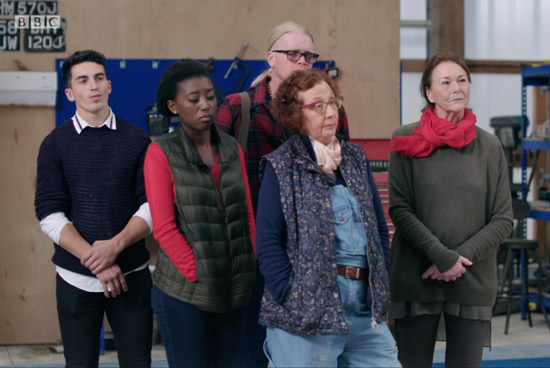
The group and tutors ready for The Big Painting Challenge Episode 2

It follows on from my earlier posts:
This episode is available to watch on BBC iPlayer for the next 27 days.
Nine painters continue in the artistic bootcamp, which this week sees themworking with their professional mentors, Diana Ali and Pascal Anson, to conquer paint-handling techniques to depict nature in all its glory.  BBC website

Continuing issues for me


Before I start I want to thank all those who took the trouble to comment on the blog posts and also on my Facebook Page where I post my blog posts once finished.  It's always really good to see if my comments resonate with others and also to get your own perspectives on how things are going - which might be summed up as Sky Arts 1 BBC 0.

Episode 2: Coherent or discontinuity


I'm having major problems with the format for the individual episodes. Last week we had two awful abortions masquerading as still life set-ups and went from those via two fast (but useful) exercises to a vast interior which was in some way supposed to be 'a big still life'.

Absolutely no teaching of perspective in the content of the programme - and then somebody gets sent home for not grasping that her perspective changes when her eyeline changes.

This week we have:
  • the reverse of still life - the two teams each had a dog to paint, neither of which was still for very long
  • exercises about how to use tools other than brushes to handle paint and make different sorts of marks
  • a discussion by Fraser Scarfe (who has morphed into a replacement of Lachlan Goudie) 
  • a big challenge about painting lots of trees - and leaves - and how best to represent these through the handling of paint

Teaching: Imperative vs. interrogative


I've still got my hackles raised over Diana's teaching style and tried this week to try and find the reason why.

I concluded that she instructs in a very imperative way - essentially "don't do that, do this" a.k.a. "my way is best". Plus she's just plain RUDE and says some completely outrageous things - a bit like a "shock jock"! (This coming from somebody who is renowned for being somewhat direct!)

It's not very energising - I'd absolutely hate to be in her group - in fact I'd walk and/or insist on being in the other one.

Diana's group gets its dressing down about the dog pics

It was interesting how Ray was swopped to Pascal this week after the the "don't use watercolour, use acrylic' imperative last week.

By way of contrast Pascal's instruction is much more carefully scripted and articulated - plus he asks questions "May I show you?"  I'm very definitely warming to him in this series.

Again, Daphne who everybody seems to think is an ogre - and who I think is just a plain-speaking who makes intelligent comments - is very interesting in the way she asks members of the group questions as she goes round the group.

At some point they will realise that she's actually asking them whether they have considered an aspect that might be worthy of consideration. There's an awful lot that both participants and the audience can learn from the questions she asks. She's very perceptive and perspicacious ie. almost always spot on!

I do think those who "parrot" comments about "her unfortunate manner" might want to bear in mind that their experience to date of painting tutors might be limited to those who say nice things to them all the time because they'd like them to keep paying fees for tuition!

Give me Daphne's feedback any time if you want to make some serious improvement as an amateur artist!

I liked Fraser Scarfe who stepped in for an absent Lachlan (of whom there was no mention). He also provided some sound assessment and judgement and was a nice foil for Daphne. (PS Do take a look at his website - he's got some paintings of trees featured!) His book is called How to Paint Atmospheric Landscapes in Acrylics - I've not seen it or read it - but it looks like the sort of book Ray might find very useful! :)

The First Challenge - doggies!

Ostensibly the next step up from painting something very still is painting something that moves.

Friday, February 09, 2018

Final Call for Entries - Wildlife Artist of the Year 2018

The Final Call for Entries
This year's  Wildlife Artist of the Year 2018 exhibition will be the first year without David Shepherd (1931-2017) at the opening - but I'm absolutely sure it will be a really great exhibition - in his memory.

However you have just a few days left to get your digital entry in to this prestigious open competition - and have a chance of winning the £10,000 top prize for Wildlife Artist of the Year. 

This year for the first time there is NO LIMIT on the number of entries you can submit.

The closing time/date for digital entries is midnight on Monday 12th February 2018.

You're probably too late for postal entries as the closing time for them is 5pm on 12th February 2018.

The exhibition is at the Mall Galleries as usual however the timing has changed. It's one between 2nd - 6th May 2018. (Note this is much earlier than usual) with the PV on the 1st May.

Final Call for Entries

Well the first thing to say is your wildlife art better be good because this competition regularly receives top notch wildlife art from around the world!

Indeed simply getting selected for this exhibition is regarded as a big honour by many wildlife artists. 

DSWF Wildlife Artist of the Year is a prestigious annual wildlife art competition. Founded by David Shepherd over 10 years ago, the competition attracts artists from all over the world and showcases some of the finest and most exciting wildlife art whilst at the same time raising vital awareness and funds for the endangered wildlife that DSWF works so hard to protect. Every entry, and proceeds from all sales, supports our work to that fight wildlife crime, protect endangered species, and engage local communities in Africa and Asia.

Prizes


The first prize is definitely worth winning and the category prizes are also very nice!
  • Overall Winner £10,000 cash prize & title ‘Wildlife Artist of the Year 2018’ 
  • Overall Runner-Up £1,000 cash prize. 
  • Remaining Category Winners £500 each.

So who can enter, what can you submit and what do you have to do?

Eligible Artists

Artists aged 17 years old and over - living anywhere in the world - are eligible to enter.

The competition is open to both amateur and professional artists and no distinction is made between them in terms of judging or prizes.


Eligible Art


The main conditions are as follows.
  • THERE IS NO MAXIMUM NUMBER OF ENTRIES - This is NEW for 2018. Previously there has been a maximum limit of five entries.
  • All media are eligible (EXCEPT photography). For example, the competition is very happy to receive artwork in media that includes oil, acrylic, watercolour, pencil, mixed media, bronze, plaster, wire, collage with styles encompassing traditional, abstract, monochrome, original prints* and many others .
* An original print is a print either in black or in colour, drawn from one or several plates, conceived and executed entirely by hand by the same artist, regardless of the technique employed, with the exclusion of any and all mechanical, digital or photomechanical processes. Every stage has been completed by hand by the artist. 
  • Entries must be completed by the entrant themselves
    • it must be their own original work. 
    • If a reference photo has been used, then the permission of the photographer is required (i.e. copyright issues are NOT allowed!)
  • Work must be completed in the last five years - hence artwork completed before 12th February 2013 CANNOT be entered.

Please note that in their Helpful Hints document the organisers state the following about the sort of artwork they are looking for and will rate highly.
The judges are looking for not only beautifully executed artworks but also imaginative interpretation, moving away from the purely photographic to interesting compositions with great characterisation, showing imagination, originality and genuine creativity. As well as showing an understanding of the subject, they are looking for a genuine love of paint. 
and
You can of course get your inspiration from a photograph or drawing, but be sure to make it your own interpretation of that image. Straight copies are not only breaching copyright but are judged to be unimaginative and dull. 

How to enter


The details of entry page on the website provides three documents (as pdf files)

Categories


Entries must be submitted to a category. The categories are:
  • Animal Behaviour: Showing a real understanding of animal behaviour, a sense of character, maybe something the judges may not have seen before.
  • Into the Blue: Illustrate the wonderful world of water, be it ocean, seashore, wetland, river or stream. 
  • Urban Wildlife: Entries can be in an urban style or depict the city life of animals and plants. Judges will be looking for both originality in the habitat as well as the contrast between wild and urban life. Vanishing Fast: Our vanishing world – it can be any species officially listed as endangered or threatened on the IUCN Red List – or any landscape that is at risk. 
  • Wings: The extraordinary variety of winged wildlife – birds and insects, in flight or at rest.
  • Earth’s Wild Beauty (including animals and landscapes in which they inhabit): The choice is yours! 
All categories are open to UK and international wildlife, landscapes, flora and fauna.
For all categories the judges are looking for....
not only beautifully executed original artworks but also imaginative interpretation, moving away from the purely photographic to compositions with great characterisation, showing imagination, originality and genuine creativity.

Method and cost of entry


Entries can be my post or online - however
  • all images submitted as an entry must be digital. Please NOTE that no allowance is made by the Judges for poor digital images or bad quality photographs. It's up to you to submit quality images.
  • all entries must reach the Foundation by 12th February 2018.
Your artwork should be submitted as a JPEG digital image via the digital entry form or should be burned to a CD. They require:
  • High resolution @300 dpi
  • minimum pixels of 2,200 pixels on the SMALLEST side
  • File size not exceeding 6MB.
  • all files must have an easily identifiable name eg you should use your surname followed by title of art artwork
Responsibilities of the artists
  • Note that delivery, collection, shipping costs and insurance are the responsibility of the artist.

What does it cost to enter


Entry costs vary depending on the status of the artist
  • normal entry fee: £25 
  • concessionary rate: £10 for DSWF members, 17-25 year olds and the over 60s.

How should I price my work?


  • All entries MUST be for sale. Do NOT enter anything you don't want sold as this exhibition aims to sell (so don't sell anything you have entered before the exhibition). 
  • All prices need to be realistic i.e. PRICED FOR SALE. This includes making your sale price appropriate for the exhibition and marketplace. This is not a vanity exhibition! Note that this competition is a bit different. Sale price will be negotiated with the artist but the final decision will be made by DSWF. That effectively means that if you enter your work and then put 
    • an outrageously high price on it so it won't sell - then DSWF can vary that so it will sell!
    • a low price on it - maybe because you don't know London prices - that DSWF can raise it so that it's consistent with prices asked for other work of the same quality in the exhibition.

Commission

There are three commission rates:
  • Sales proceeds for works exhibited at the exhibition are to be split 50/50 for sales made for the duration of the exhibition and for one month after. 
  • After one month, any sales made as a result of the continued promotion of the piece by DSWF will be split 70% artist and 30% DSWF
  • Sale proceeds resulting from commissions taken at the exhibition are to be split 70% artist and 30% DSWF. 

More about Wildlife Artist of the Year in previous years


Sunday, May 21, 2017

Bodleian Treasures and Painting by Numbers

If you're ever in Oxford, as I was on Friday, I urge you to go to the Weston Library on Broad Street Oxford (opposite the Sheldonian Theatre). There are two displays of note involving natural history and botanical artwork from the past.

Bodleian Treasures: 21 pairs and a tropical forest


(Bodleian Treasures: 21 pairs and a tropical forest until 11 February 2018)
This is the first is a periodically rotating exhibition which pairs up two items from some of the best treasures of the 12 million items in the Bodleian Library Collection.

At the moment one of the major displays included covers a Tropical Forest (see below)

Tropical Forests display
It also includes a copy of Audubon's Birds of America

The owl in Audubon's Birds of America
Plus a volume of Robert Thornton's Temple of Flora on display (see below). “The Temple of Flora” is the third and final part of Robert John Thornton’s New illustration of the sexual system of Carolus von Linnaeus. 

I couldn't find a digital copy on the Bodleian website - so here's the version contributed by the Misssouri Botanical Library to the Internet Archive

Double page spread from Robert Thornton's Temple of Flora
In addition, the display included an 11th century Herbal -  translation of a translation of the Herbarius of Pseudo-Apuleius. The plants were drawn first and the text added afterwards.
The Herbarium Apulei was one of the most widely used remedy books of the Middle Ages. Over 60 medieval manuscripts of the text survive.
Copy of the Pseudo-Apuleius Herbarius (11th century)
Dropwort is illustrated on the left and Narcissus poeticus on the right

Painting by Numbers


(Painting by Numbers until 9 July 2017) - This is about a Leverhulme sponsored scientific project to decipher Ferdinand Bauer's colour code - used for annotating his sketches made while accompany expeditions around the world. It's explained in this article Bodleian display showcases scientific research into Bauer's botanical masterpieces.
The display is in the main entrance hall - next to the entrance to the Treasures exhibition.

The Painting by Numbers Display
One of Bauer's annotated sketch for the Flora Graeca
Bauer made hundreds of pencil sketches of plants and animals when he explored the eastern Mediterranean in 1786-87.
Bauer's Colour System - a numerical colour code and pigments in mussel shells
There will be a lecture next Wednesday lunchtime (24th May) about Reconstructing Ferdinand Bauer's mysterious colour code by Dr Richard Mulholland, Leverhulme Research Fellow, Bodleian Libraries. Dr Mulholland is an art historian who is usually involved with lots of scientists in relation to the conservation of art from the past.

The project aims to decipher Bauer's numerical code used on one of his expeditions (for the Flora Graeca - also a Treasure of the Bodleian) and identify the numbers back to colours and pigments. (You can see a digital version of the Flora Graeca online)

I'll also be writing in more depth about this project and last Friday's lecture by Rosemary Wise, the botanical illustrator working with Oxford University in Botanical Art and Artists - News next week