Showing posts with label Art classes and workshops. Show all posts

Monday, November 16, 2020

Continuing Art Education - Online #1: RISD

One of the advantages of the Pandemic is so much education and instruction is moving online. 

Plus being online means it can now be accessed by students all over the world. 

The only limitation on class size is the numbers one teacher or instructor can reasonably provide feedback to.

Rhode Island School of Design

RISD Ready and Reactivated. Campus looks a little different this fall due to COVID-19, but through the efforts of our community, creativity flourishes as ever.
Rhode Island School of Design is a private art and design school in Providence, Rhode Island.  Founded in 1877 it offers bachelor's and master's degree programs.

It also offers a program of continuing education 
This winter, RISD Continuing Education is offering 40+ online courses for adults, which can be taken from anywhere in the world, at any time of day or night.


RISD Continuing Education

This is the dedicated website for continuing education
Art and Design for Everyone
provides an immersive and innovative art and design education for everyone, at all stages of life and all levels of experience.

The offerings are diverse and include courses for both adults and kids and face to face and online. 

Rhode Island School of Design Continuing Education announces over 60 online courses for adults and teens this winter, as well as eight certificate programs now being offered 100% online.
These are their news updates today about
  • Minimum requirements for online courses are a computer, smartphone or tablet; an internet connection; and a web browser
  • The minimum system requirements for those classes/courses which use Zoom include: 
    • A broadband (Ethernet or fast wireless) internet connection, 
    • a computer running at least Windows XP or Mac OS 10.7, 
    • at least 4GB of RAM, 
    • a built-in camera or USB plug-in webcam, speakers or headphones, and 
    • a microphone (if you have a built-in webcam, it includes a microphone).
“We are excited about the new opportunities and benefits online instruction offers; we found people really appreciate the flexibility it affords and we have been able to expand our audience to include students from all around the world.”

Adult Programs:
  • include a broad range of visual arts and design disciplines (both traditional and digital)
  • plus topics related to art and design as integral parts of our lives and culture
  • scheduled over four terms in the Fall, Winter, Spring and Summer.
There are four different types of courses - and these include 
Certificate programs are designed especially for adults who want a rigorous and comprehensive course of pre-professional and professional study on a part-time basis.
These are the range of online courses.

Page 2 of the portfolio of online courses available to adults

You can take certificate program classes with the intention of joining a certificate program at a later date - and if you do this you have a one-year grace period in which to apply.

RISD Online Certificate Programs

If interested you are urged to make sure you sign up quickly as a number of courses were filled very quickly in previous term.

If you know of other reputable educational institutions which also deliver comprehensive online courses please let me know (Message me via https://www.facebook.com/makingamark2/)

Sunday, May 24, 2020

Covid-19 #13: Cancellations and Refunds


I've heard various very interesting stories about what has happened in relation to negotiations on cancellations and refunds arising from all those events cancelled in the context of the Coronavirus Pandemic.  For example:
  • art fairs 
  • art events 
  • art exhibitions 
  • open exhibitions / art competitions 
  • art courses / workshops etc 
I'm proposing to do a blog post about this. I'm very interested in the perspectives of both organisers and customers - basically anybody who paid money before the lockdown and has now either got their money back following cancellation of the event or looks likely to lose what they've paid out - and why that has happened.

I'm particularly interested in learning points which can be shared with others

My aim is to provide some learning points and in doing so I shall be highlighting case studies and examples of
  • good practice - both organiser and customer happy
  • poor practice - either organiser and/or customer unhappy
  • bad practice - illegal practices (usually relating to contract law) requiring court action to get appropriate recompense (with the terms and conditions of the 'event' and any insurance cover)
Please message me via 
if you have had to either:
  1. work out what to do if organising an event / exhibition / whatever - plus
    • what advice you got and 
    • what you you did in the end
  2. asked for a refund and 
    • either got one (quickly or otherwise)
    • or not got one - and what reasons you were given as to any failure to do so
    • what action you took as a result - if any.
AND whether

  • you will be taking out better insurance 
  • and/or reading the small print much more closely in future!

Friday, March 13, 2020

Covid-19 and Art #3: The timeline for cancellations and postponements?

This post explores when the coronavirus peak will occur and when it will be all over and hence what's the TIMELINE FOR ARTISTS for cancellations, postponements and rescheduling of art exhibitions, events, workshops and courses and art fairs etc in the future.

The overall timeline relates in part to:
  • when the virus peaks and 
  • how long it is around for - within the context of the summer weather
  • how successful the action measures to flatten the peak are 
  • and whether the government get the timing right for their implementation!

One thing - our best hope in terms of deaths is that this is not going to be speedy.


More specifically, this post is based on
  • what was said yesterday by the Chief Medical and Scientific Advisers to the UK Government.
  • what I've read today - by learned people.
However first I'd like to introduce you to my brand NEW Coronavirus / COVID-19 and Art Resource Page on my Art Business Info for Artists website
This page aims to highlight
  • issues which many people in the art world will need to deal with during the Covid-19 Pandemic - over the next few months
  • what might be potential solutions to the challenges being faced.
  • Plus updates on the current situation for planning purposes
This is where all useful information I come across will go. Plus links to this and previous and future blog posts about this very challenging situation.

My NEW RESOURCE WEBPAGE about the impact of Coronavirus COVID-19 on art and response to this

What's the Covid-19 Timeline looking like?


The timeline will be different in every country because of:
  • different demographics
  • started at different times
  • acceleration through the community varies
However the basic epidemiology of how an epidemic behaves remains the same in broad terms. There are four salient factors/questions to be considered when planning as an artist or art organisation for what to do for the rest of this year.
  • where we are now?
  • when will it peak?
  • how long this will go on for?
  • how influential is the weather?

Where are we now?


Where we are (in the UK) right now is:
  • FOUR WEEKS behind Italy (which sent a shiver down the spine of a lot of people yesterday when that was announced!)
  • we're in the acceleration phase - but nowhere near the Peak - this is the phase when numbers keep doubling every few days until we get an exponential curve which becomes virtually vertical just before the peak
  • at the peak (whenever that is) the numbers stabilise and then start to reduce. However one needs to be wary of the fact this is happening due to poor collection and reporting of data. 
  • HOWEVER: The Peak will become more distant and take longer to reach if 
    • the government succeeds in "flattening the peak" - to match sickness to capacity - and help public services and resources in terms of beds and medical staff accommodate the sickest patients. 
    • if this happens then the doubling of numbers will take longer and the pandemic will "pancake" to some extent 

THE CASE OF ITALY

However today I heard that Italy has definitely NOT yet peaked (i.e. the growth curve for both cases and deaths is still exponential (i.e. still growing and going up in terms of daily numbers). Also bear in mind we are four weeks behind this profile of cases and deaths - although hopefully in the UK it will be flatter.
DAILY NEW CASES IN ITALY 
(courtesy Worldometer)
TOTAL CORONAVIRUS DEATHS IN ITALY
(courtesy Worldometer)

Daily Deaths MIGHT be beginning to flatten out - but in part this depends on how good the reporting processes around the country are working.
  • Deaths on 10th, 11th and 12th were 168, 196 and 189 respectively 
  • BUT that might be due to under-reporting on the 9th when the number reduced!

When will it peak and how long will this go on for (in the UK)?


Measures will cause disruption for very many months and will progress as we get nearer to the Peak. (Statement in the briefing yesterday)
Two things you need to know:
  • the classic curve and timeline is STEEP and SHORT. It has a 
    • very rapid acceleration into a massive peak (doubling of numbers every few days) and 
    • then a similar deceleration as it runs out of people to infect 
    • it's all over in a relatively short time - in that particular place - and there are many more deaths as the health system is totally overwhelmed (just read of the accounts of what it's like in Italian hospitals and how many health staff have died for a taster of what might be like)
    • The virus will meanwhile move on to other places and start all over again..... i.e. this is a pandemic (global).
  • The managed curve and timeline is FLATTENED and LONGER. This means that
    • the acceleration rate is slower, 
    • the doubling rate takes longer
    • the peak comes later
    • the peak is flattened - and hopefully stays within managed healthcare capacity (i.e the reason for pushing/managing the curve)
    • there may be fewer deaths as more people will get active treatment
    • BUT the whole process takes much longer - probably twice as long.
Covid-19-curves-graphic-social-v3


THIS IS MY EXPECTATION - based on what was said yesterday and what I've read today.
Measures need to be in place for up to 13 weeks. Measures only work with cooperation of the population (Statement in the briefing yesterday)
  • OFFICIAL VIEW: with no action it will peak in 4-13 weeks
  • My view:
    • gets pretty bad in the next 4 weeks (by mid-April)
    • but measures taken have a positive effect, the community complies and the peak is moved forward and arrives between 8-13 weeks from now (by mid- May to end of June)
    • it starts to get better in late July/August - but is not over
  • HOWEVER as a result:
    • the deceleration rate takes longer and the end of the epidemic may not arrive until the end of September
In part it will depend on the weather. 
  • If we get a very good summer it will finish faster
  • If the weather is awful then it it will drag on much longer
In part it will depend on the co-operation of the population
  • if people get fed up and stop co-operating with government measures then the curve cannot be managed. 
  • If they stop co-operating just as we get to the peak, then we'll get a Pandora's box situation. 
  • This is why the government is putting off the strictest measures for as long as they think they can get away with this. Other countries will have to hope their population is resilient and behaves well!
So my expectation is "not nice" with LOTS AND LOTS of exhibitions, events, fairs, workshops, courses being cancelled between now and August. Particularly if they are likely to be attractive to older people who have got fed up with staying at home.

Bottom line - if you plan for anything after 1st October you're probably OK. I'd describe this as a cautious view of how it will "pan out" - but I have been known in the past (during my career) for being very good at predicting how things will happen over the longer term.

IMPORTANT NOTE! Those who get the best dates and venues after the pandemic are those who move fastest right now! There's going to be six months worth of activity trying to move forward!!

A CAUTIONARY NOTE: Bear in mind all this is guesswork on my part - even if I'm using facts from authoritative sources - and hence I have no liability for any decisions you make based on my prediction

That's because it's just that "a prediction". It's not a fact. If you want facts you'll have to wait and see how it all works out in the end. :)

My next post


My next post will either be about
  • EITHER the need to take your third party liability very seriously - people could die!
  • OR the legal aspects of ecommerce you need to know if selling art online
Tell me what you think on my Facebook Page.

More Resources


Previous posts include:
Coronavirus / COVID-19 and Artmy NEW webpage on Art Business Info for Artists which covers:
  • Updates
  • Risk Management
  • Practical Measures & Solutions
  • Innovations / Good Ideas
  • Closures of Art Galleries & Museums
  • Cancellation / Postponement of
    • Art Fairs
    • Art Exhibitions
    • Classes, Courses, Workshops
    • Art Schools

Thursday, March 12, 2020

Coronavirus & Art #2: Thoughts and recommendations on the implications of a pandemic

Here's my updated thoughts about the implications of the CO-VID 19 (coronavirus) PANDEMIC for art, artists, art organisations (galleries / societies / schools etc), art exhibitions and private views, art fairs and art schools in the short and longer term.

It comes with a list of ACTIONS which I RECOMMEND artists or art organisations should either be doing or giving serious thought to. 
  • Please SHARE with any artist or art organisation that you think might find it worth a read.
  • You might want to bookmark this - I'll probably come back and update this as I think of more.
Image: CDC/Alissa Eckert, MS; Dan Higgins, MAMS

This post is further to my post last week on Coronavirus & Art #1: Risk Management for Artists & Art Events.

I'm going to aim for an update and further thoughts/sharing of good practice about once a week. [UPDATE: I'll do a timeline re prevention measures in the UK tomorrow following announcements today. Bottom line: 
  • this is the worst health crisis for a generation and is going to go on on for several months and 
  • the peak is weeks/months away
  • we are 4 weeks behind Italy]
Just last week, people were talking about various things still going ahead.

Some were even 'joking' about how this was a really good time to visit Italy while it's quiet.

This week, it's changing - and will keep changing - and will become MUCH more serious.
Now we have:
  • restrictions on movement of anybody within Italy - which is in total lockdown with curfews - with most shops (except food stores and pharmacies) and museums/galleries closed. 
  • all travel to the USA from 26 European countries banned (excluding the UK)
  • the Federal Government in the USA has prohibited all travel for its employees - so nobody is going to international meetings or conferences
  • major football games are being played behind closed doors
  • Israel is requiring 2 weeks quarantine for all visitors
  • India has suspended all visas
  • activities which involve more contact - and the scope for transmission - are being cancelled for a lengthy period eg 
More decisive action is still to come e.g.
  • Spain considering putting Madrid into lockdown; 
  • Ireland is closing all its colleges and schools today and also banning mass gatherings (100 people max. internal and 500 max external)
Plus although the numbers of confirmed cases are climbing it's almost certain there are many, many more which have not yet been diagnosed due to the lack of testing kits and processing capacity. It is already a lot worse than indicated by the official numbers.

[UPDATE: UK has c.600 recorded cases re. testing BUT the Chief Scientific Officer says it is almost certan there are about 10,000 people with the viral infection already in the community]

The numbers of confirmed cases in the UK declared yesterday had doubled on those declared 4 days previously. This is how exponential viruses work - they double every few days and the angle of the curve gets steeper before things get better. The curve for Italy is virtually vertical.

All of the following (for UK artists) is based on the premise that the UK is now very much into the exponential curve of viral infection (and it's likely other countries are the same).

What's going to happen


Below are the things I think will happen soon or in the next few weeks. These include:
  • extended closure of schools and colleges and arrangements for home learning
  • promotion of home working
  • advice to avoid all crowds
  • advice to avoid crowded public transport eg walk or cycle or travel off peak
  • cancellation of all events due to get more than X people (who knows what X is?)
  • closure of some commercial retail outlets

The issue is more when rather than whether given what we've now seen what happens with an outbreak which went out of control in Italy.

When will it end. Who knows? Everything is speculation at the moment. There are theories by learned academics and  advice by leading health and legal people - and unfortunately they don't all agree!

If you are doing anything innovative which you'd like to share or encourage other artists to join please contact me my Facebook Page.

Artists and Art Teachers


On the one hand it's a blessing.
  • Social isolation means LOTS of uninterrupted time to get on with making art.
  • LOTS of people sitting around at home means lots of people flipping through art on a screen - and buying art (we hope). It's your job to make them buy!
On the other hand, it's a curse. There will be no income from:
  • art fairs - if cancelled by organisers and/or poor attendance for those which go ahead
  • art sales - because the chance of your art exhibitions being cancelled is more than likely UNLESS unless you are ALREADY sorted around selling art online. 
  • teaching - because classes and workshops will be cancelled (by you or those attending - it's inevitable)

My RECOMMENDATION:

Monday, February 17, 2020

Insurance Policies for Art Teachers

I've developed a new resource page about Insurance for Art Teachers.

Do you teach art? Or have you ever thought about teaching art outside a state school setting?
Was insurance one of the things you thought about when planning your first workshop or art class?

It almost certainly wasn't - and yet developing independent art classes - in your own home, in the student's home or on third party premises can be a very risky business - and the liability very often lies with you. If you're not properly covered by insurance your personal assets could be 'at risk'.

The NEW PAGE on my Art Business Info for Artists website covers:
  • Insurance Risks for Teachers
  • No Insurance - what can happen
  • Do you need insurance to run an art class?
  • UK Insurance Policies for Art Teachers
In due course, I aim to identify insurance policies specifically designated for art teachers elsewhere in the world - and for this is I need your help. 

Please use the form at the bottom of the page to tell me:

  • the country you live in
  • the name of the insurance provider
  • the name of the policy
  • a URL link to the policy
  • details of the type of specific cover it provides for
    • art teachers or
    • art classes
    • which country

More about Insurance for Artists


This page adds to my current resources which are:

Thursday, August 22, 2019

Art Education: Courses, Workshops and Talks at the V&A Academy

The V&A Academy provides courses, workshops and talks for Adult Learners at the Victoria and Albert MuseumThey are predominantly art history related and also focus on design and decorative art as well as fine art.  They also include professional development courses which may well have wider application to those involved in the business of art and design.

At this time of year people often start planning any courses they want to do over the winter months - hence his post!

If anybody wants to recommend any other venue for courses please contact me

Courses

The 2019–20 V&A Academy Course programme is our richest, most varied yet. Whether you’re looking for an inspiring weekend or an in-depth exploration of your favourite subject, we welcome all kinds of learners. You can expect exclusive lectures from V&A experts, hands-on sessions with museum objects, behind-the-scenes access and day trips to see history in context.
examples of some of the courses

They've recently published their V&A Academy 2019 - 20 Courses brochure PDF (3.1 mb)

Titles of Available Courses in 2019-20

The Courses vary from:

  • Year Courses 
    • these take place on one fixed day per week for three terms.  
    • Day tickets are available for some of the days in these courses. 
    • There are also optional visits to External Locations
  • Short Courses - often frequented by those who have retired.
    • in each of the Autumn, Spring and Summer Terms
    • typically 4, 8 or 10 week courses
    • some are in the evenings
  • Weekend Courses - unsurprisingly are on Saturday and Sundays making them accessible for those who work.
They also include professional development courses for those working in art galleries and museums or wanting to do so.  For example

Sunday, August 11, 2019

Sarah Wimperis talking and teaching about how Van Gogh paints

A big shout out to my friend Sarah Wimperis who was the artist commenting on the Official Audio Guide to Van Gogh in Britain at Tate Britain - and talking about the Van Gogh paintings and how they are painted.

All the people with the headsets on are listening to Sarah Wimperis
commenting on how Van Gogh painted this painting - Starry Night (Arles, August 1888)

I finally got to see the exhibition last week having only just realised in time that it was about to finish!  (I hate the crowds at the beginning and have to endure the crowds at the end when I forget to make a date to go after the beginning and well before the end!)

I posted the above photo to my FB account and Sarah commented with Those people with headphones are listening to me!

I thought she did brilliantly - highlighting aspects of the painting which just don't come through when curators or critics talk about them. 

What I liked was she talked about how careful he was - in terms of the colours used and his brushwork.

For example, in relation to the Starry Night Painting (Arles 1888), the caption, by the curator says one thing


While Sarah - on the Audio Guide - is talking about LOOKING at:
  • how many different blues he has used for the sky to demonstrate that a sky is not always a flat colour
  • how he has always made sure his brush marks reflect the contours or form of the object he is painting e.g. the broad brush marks for the ripples in the water are all horizontal
LOOK AT: the various colours used in the night sky and the horizontal brush marks he made for the water

That's because she spent several months in 2017 painting 788 paintings exactly like Van Gogh for the total of 65,000 needed for the film 'Loving Vincent'! (see example of four frames).

Sarah was the only English artist out of 125 artists from all over the world - and hence a natural choice for the audio guide!

You can see something of what she did on her website - on the Loving Vincent page

Learn to paint like Van Gogh


Having learned an awful lot about how Van Gogh painting, Sarah now includes tuition for those who would also like to paint like Van Gogh in her portfolio of painting workshops. 

Check out the workshops section of her website for more details. 

I just rang her to tell her about this blog post and she tells me that her tuition dates for next year will be going online within the next week!

In the meantime she is providing painting tuition in oil and gouache on painting holidays and workshops this year in:
  • Provence - August 31st - September 7th 2019
  • Norfolk - September 22nd - 26th 2019 - already sold out

Sunday, February 10, 2019

Challenge #2: Life Drawing Live - from the Royal Academy

I'm quite liking the idea of a monthly challenge during 2019. So, after snowy paintings, my Challenge for February (I'm thinking once a month is about right) is to watch the live streaming by the Royal Academy of a Live Life Drawing Class - and draw along with the class!

a still from last year's class
See #LifeDrawingLive: the anatomy class - A live-streamed class to join from home.
This takes place:
ON: Thursday 28 February 2019
AT: 7.30 — 9pm

You've got the rest of the month to practice - and there are some ideas below


My sketch from A 'Day to Draw' at the National Gallery
done while listening to Sarah Simblet talk about
the anatomy and skeletal features and muscle groups
in Polliaiuolo Brothers ' The Martyrdom of Saint Sebastien'

This was my sketch done while listening to Sarah Simblet explain anatomical features in various paintings in the National Gallery in 2007!


Life Class on Channel 4 in 2009


Jonathan Yeo was obviously totally unaware that live streaming has been done before!

The live streaming of a life class has happened once before on Channel 4 when we had Life Class in 2009 and LOTS of people joined in.  Below is what happened.....

Friday, March 02, 2018

Sarah Wimperis explains how to paint like Van Gogh for 'Loving Vincent'

It's not often I use one of my blog posts to highlight an article on another website but I'm making an exception for this interview with Sarah Wimperis - one of the painters of painted animated film called "Loving Vincent"

The significance is the film is up for an Oscar on Sunday!
Across the globe, the movie has secured 11 wins and over 48 nominations, including Best Animated Motion Picture at the 2018 Golden Globes, held Jan. 7, and Best Animated Feature Film at this year’s Academy Awards, taking place March 4 in Los Angeles.
Here's the interview Meet the Artists Behind the Oscar-Nominated ‘Loving Vincent’ on Artists Network. It's very good at telling
  • what life was like for the artists working on the film
  • how personal style had to be subjugated to the needs of the film
  • how the artists worked in Gdansk
  • what the process was for creating paintings for the animation
  • how many paintings were needed to get half a minute of film (take a guess before you read the answer!)
  • the benefits of copying painting style of an past master
  • what Saeah has been doing since she finished painting
Sarah is offering some "Paint like Van Gogh" painting workshops later this month in Stroud and Bath for those who have always wanted to have a go!

Below are some pics taken by Sarah while she was painting for the film.

One of Sarah's Paintings
Sequences within the film were created from individual paintings. These were then adjusted to make the next image in the sequence - and the next and the next. Read the article to learn more about the process

Four frames from the wheatfield conversation - painted by Sarah
See the first painting fits into this series of four paintings for a sequence

Sarah looking at her paintings
If you look very carefully I think you can work out which way round the paintings below were painted.
A complete four frame section - from the Cafe Interior - painted by Sarah

I'm not sure I've ever seen a more extensive palette. Learn how one of the secrets to effective transitions was making sure you'd mixed enough paint!

Sarah's palette supplies
and finally some finished frames.

Finished frames in the Gdansk studio - with film markers for lining up attached

You can see Sarah bouncing up and down if the film wins an Oscar on Sunday

Thursday, February 08, 2018

Drawing people

Given I've been commenting on other people painting portraits in my reviews of the Portrait Artist of the Year series, it occurred to me that maybe those who aren't aware of my background might think I had some nerve!

So I thought I'd better establish some credentials! 

I don't paint (I'm a "dry media" person) but I do draw.

I've also been drawing people for years.

Over the years I've also studied very many old master drawings - which is how come I like to hatch when I'm drawing in pen and ink and coloured pencil.

Plus I've commented on very many drawings and paintings of people by contemporary artists over the last 12 years as part of my reviews of exhibitions of portraiture eg the BP Portrait Award

A drawing in pen and ink in 45 minutes
no contour lines and no underdrawing
all hatching and eyeballing the model

Before my tenosynovitis in my drawing hand got bad (Don't EVER interview all day for two weeks non-stop!) I used to go to a weekly "Drawing a Head" class at the Princes Drawing School (now Royal Drawing School) - not so much for the tuition as having models to draw.

There I used to "eyeball" the models and in TWO HOURS used to progress through a series of personal challenges which went a little way beyond drawing the head

Draw two people, full size, in graphite on a large sheet of paper


The interesting thing about drawing two models is getting the perspective right
and making them look as if they are actually sat in the chair (or on a cushion)

I always drew in the backgrounds as it gave me a scaffolding matrix
against which to measure off parts of the body!

Draw the models and the other artists

Then there was two models and the artists on the other side of the room......

I spent many weeks doing this until I decided I now needed the challenge of pen and ink.....

Sunday, February 04, 2018

Events, demos and workshops at the 2018 Pastel Society Exhibition

One of the really good aspects of the Annual Open Exhibitions by National Art Societies is the fact most make an effort to put on a range of learning events for the public.  Most do demonstrations, some do guided tours and some do workshops

The Pastel Society is better at this than most and below you can find a list of the upcoming workshops which will run during their Annual Exhibition which runs between 20 February and 3 March at the Mall Galleries.

Cover of The Pastel Society Catalogue

Below you will find the link embedded in

  • the title of the event are to a page which should tell you more about it. 
  • the name of the artist are to their website (if they have one)

Tour

Events: drink and sketch or paint

The Mall Galleries organises a drink and sketch event on the last Thursday of each month - which generally coincides with one of the annual exhibitions by one of the national art societies. They each have a different theme. There's no tutor but lots of people wanting to sketch.

Demonstrations

All these events are free to attend with admission to the exhibition
  • 21 February (12:00pm to 4:30pm)- Working with Portrait ModelsSusan Relph PS will be in the gallery working from two portrait models and visitors can bring their own sketchbooks and media and join in
  • 24 February 2018 - Two members of the Pastel Society will be pastel painting in the galleries 
Pastel landscape by Cheryl Culver in the 2018 Exhibition by the Pastel Society


Workshops


The workshops will be held in the dedicated Learning Centre (accessed via the main entrance to the galleries) and run from 11:00am to 5:00pm. All workshops costs £60 or £55 if you book four workshops or are a Friend of the FBA (or £50 if a Friend books 4)
Participants may bring a packed lunch although drinks and snacks are available from the Mall Galleries Café. Easels and drawing boards will be provided, but students should bring their normal range of materials. Models will be available, but where the subject is landscape, participants are recommended to bring sketches to work from.
Now is the time to get signed up before all the spaces go!  
You can Download an Application Form 
Pastel still life by Jan Munro in the Pastel Society Exhibition 2018
PS You can see the Catalogue for the Pastel Society Exhibition 2018 on Issuu

Friday, June 16, 2017

If you're interested in drawing - in London

For those interested in drawing, the Royal Drawing School is offering some opportunities to improve your drawing via

  • The Foundation Year
  • Free Life Drawing events
  • Summer Schools

The Foundation Year


Next Tuesday is the Open Day for The Foundation Year - A free one year, skills-based foundation course in London's creative Docklands
  • full-time course - five days of teaching a week 
  • structure of the course progresses from set assignments towards self-directed study
  • a limit of 50 places to ensure one-to-one tuition
  • free to 18 and 19 year olds 
  • some bursaries available for over-19s.
  • located at main campus at Trinity Buoy Wharf
You can book for Open Days on Tuesday 20 June 2017 @ 2pm
This is a link to the event announcement on Facebook re. the Open Day on 20th June and the same on the webite

Plus 2017/18 Open Days will be held on:
  • Thursday 12 October 2017 @ 2pm
  • Thursday 26 October 2017 @ 2pm
  • Saturday 25 November 2017 @ 11am
  • Wednesday 17 January 2018 @ 2pm
  • Saturday 27 January 2018 @ 11am

Applications for The Foundation Year 2018/19 will open in September 2017 and close in February 2018

You can see The Foundation Year End of Year Exhibition 2016-17 at Trinity Buoy Wharf between Wednesday 14 June – Thursday 22 June 2017 (Open 11am–6pm daily)

FREE Life Drawing

Every first Thursday of the month, during term time and the holidays, there is a free life drawing session, in collaboration with Time Out and the Whitechapel Gallery, 6.30-9pm. Places are offered on a first-come, first-served basis, and basic drawing materials are provided free of charge. This month we will be drawing in the studio with a life model.
See the website for more details about dates and venues for the First Tuesday events at:

Other public courses

More information about other public courses can be found on the website. You can also download our Public Courses brochure.


Sunday, December 04, 2016

The Drawing Year - end of year exhibition

...otherwise known as the The Drawing Year 2015—16 Postgraduate Programme end of year exhibition is now on
at: the Royal Drawing School Shoreditch
until: Tuesday 17 January 2017 (Monday to Friday 9am—9pm)

It opened on Friday and includes over 300 works by the MA level postgraduate students.

It's always worth taking note of what The Drawing Year students are up to as many of them go on to feature prominently in the "selected artists" lists I post on this blog in relation to prestigious national art competitions from time to time - and some of them win the big prizes!

The Best of The Drawing Year
Drawings by Matthew Booker, Emma Inge and Eleanor Watson
It's also a good indication of the nature of contemporary drawing - the nature of which might surprise those who favour the photorealistic version of drawing.

The Drawing Year


The Drawing Year is a one year postgraduate level course run by The Royal Drawing School founded by HRH Prince of Wales (and previously known as the Princes Drawing School).
The place to learn to draw. Drawing is a primary language. It is a crucial route to innovation across the creative disciplines and beyond, from fashion, fine art and animation to filmmaking, product design and engineering.
Important features of the Drawing Year are:
  • post-graduate MA level 
  • full-time
  • bursary/scholarship approach i.e. no fees
  • free studio space
  • one year - three terms of 10 weeks each
  • Students are expected to attend:
    • a minimum of two taught full days a week at classes
    • Wednesday evening forum, lecture series and 
    • personal studio practice days.
The Drawing Year is a full scholarship MA-level course offering up to thirty students the opportunity to focus on drawing from observation for one academic year. There are no tuition fees for The Drawing Year – all students are awarded a full scholarship and receive a free studio space.
Find out below how to learn more about the course and how to apply for a place.

The Drawing Year postgraduates 


Those taking part in this exhibition are as follows.

I was rather surprised at the extent to which students didn't have websites and/or have done little to make themselves easily found on Google.
  • Euphrosyne Andrews
  • Daniel Blumberg
  • Matthew Booker
  • India Boxall, 
  • Becky Brewis Becky graduated from Oxford University of Oxford in 2010 with a degree in English (2.1) and then spent a delayed postgraduate year at the Royal Drawing School doing The Drawing Year (MA-level bursary) September 2015-December 2016 (Twitter)
  • Grace Exley Prior to the Royal Drawing School, she studied at the Ruskin School of Art in Oxford. This is a podcast about her drawings.
  • Oscar Farmer
  • Aisha Farr - studied English and Ancient Greek at the University of St Andrews and UCL prior to The Drawing Year.
  • Holly Froy
  • Shanti-Om Gorton - graduated from Brighton University with a BA Fine Art Painting
  • Thomas Harrison - While a student on the Drawing Year, Tom Harrison had a drawing of a view from a flat selected for the Jerwood Drawing Prize 2015. He then went on to win the £8,000 First Prize.  This is a blog post about that achievement - Below are two more views of the view of scaffolding from a flat.

Monday, June 27, 2016

Brexit #1: What does it mean for UK and EU Art Students and Schools?

There is no certainty right now about Brexit means for art and artists. This is a first in a series of articles commenting (hopefully in an intelligent and factual way!) on what Brexit might mean for different aspects of Art and Artists.

This first article focuses on art students and those wishing to take fine art degrees, short courses, workshops, classes etc in terms of:
  • EU students wanting to study in the UK
  • UK students wanting to study in the EU.
Plus it also comments on some of the implications for art schools and other educational establishments.

I'm trying here to indicate a framework for how things might work going forward.  I'd be very happy to add into this post any information or comments from people with relevant experience or expertise. 

Darwin Building, Royal College of Art in London, spring 2013
Royal College of Art - for postgraduate study

What happens now?


In the short term, nothing changes immediately - apart from on the financial markets. 

When Article 50 is invoked and the negotiations begin it should become clearer what happens next. Two years are allowed to conclude them.  I'll update this post and/or write a new one as and when any changes are announced

However the major question is if and when Article 50 is invoked - and how the various parties behave towards one another as negotiations proceed.

Hopefully at some point everybody will stop running round like headless chickens and calm down and get on with whatever needs to be done for the best interests of all concerned.

You can be certain during negotiations there will lobbying for special exemptions and deals for specific circumstances. However what those will be and what happens will depend as much on the attitude and tone struck by EU Members and Politicians.

In terms of art students it's much easier to say what's likely to happen in future with respect to EU students coming to the UK than what the EU might decide with respect to UK students wanting to study at an approved educational institution in the EU. It's probably going to be similar - but there are no certainties.

What it means for Art Students


The University of Arts, London issued advice to their students the day before the referendum - What does a Brexit mean for UAL students?  (Its students actually come from over 140 countries from around the globe).

Study Visas to come to the UK
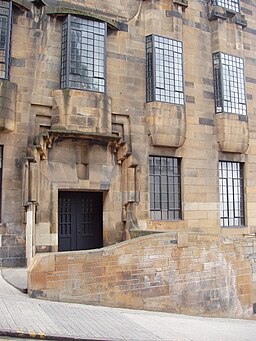

Glasgow School of Art 52
Glasgow School of Art
- the Mackintosh Building
At present you don't need a visa to come to the UK to study if you normally reside within the EU.
If you are a student from a country outside the European Economic Area (EEA) and Switzerland, and not already living in the UK, you need a visa to study in the UK.
University of the Arts, London
However if and when the UK leaves the EU this will very likely change for all students who are EU Nationals.
There will an end of unrestricted free movement. | Douglas Carswell - interviewed on the BBC 27 June 2016
However education might be an area where a special deal is done given the high education sector's dependence on fees from overseas students. This is an aspect to keep an eye on.

I make no predictions but I'd expect some heavy lobbying from the educational institutions on this one.
Every year, universities generate over £73 billion for the UK economy – £3.7bn of which is generated by students from EU countries | EU referendum: An open letter to UK voters from leaders of 103 British universities
After the Exit has been agreed, it's reasonable to expect that all EU nationals wanting to come to the UK to study art will be subject to the same terms and conditions as nationals from any other country.

If visas are required in future, the type of visa will depend on what sort of study is involved. Links below are to Visa Information from the Government.

There are currently two types of Student Visas for people who want to come to the UK for study purposes
  • Tier 4 (General) visa
  • Short-term Study visa
Somebody coming as an academic visitor needs a You need a Standard Visitor visa.

Tier 4 Visa


At present you can apply for a Tier 4 (General) Visa if you are a non-EU national.  There are various conditions.  They key conditions are that:
  • there is a limit on the amount of time you can spend in the UK on this type of visa.
  • it only relates to educational organisations which hold a Tier 4 licence - which means if they lose their licence you lose your visa unless you can find another sponsor
This is for students aged 16 years or over who are coming to UAL to study:
  • A full-time degree or degree-level course (e.g. BA, MA, PhD);
  • A further education course (e.g. Foundation Diploma);
  • A pre-sessional course;
  • An English language course (at level B2 in the Common European Framework of Reference for Languages).

Short-term Study Visa


Short term Study Visas are for people wanting to do a short course of study in the UK
What you can and can’t do
You can:
  • do a short course of study in the UK, such as an English language course or a training course
  • do a short period of research as part of a degree course if you are studying abroad
You can’t:
  • study at a state school
  • work (including on a work placement or work experience) or carry out any business
  • extend this visa
  • bring family members (‘dependants’) with you - they must apply separately
  • get public funds

Three year courses and a two year exit period


I expect higher education establishments will be in a quandary about offering places for the next academic year for three year courses as these will extend beyond the two years allocated for completely exit negotiations.

My guess - and I emphasise this is a guess - is that
  • they will lobby hard for some transitional arrangements for students who 
    • started their academic studies this year - but will not complete in the two years after Article 50 is invoked.
    • start to study after the vote and before the Exit.
  • they will provide lots of information and advice to students as to the requirements for visas if the UK exits the EU within the 2 year period or by the end of it.  
Bear in mind that it very much appears that in relation to being a student in the UK the worst it can be (on the basis of current arrangements) is exactly the same as it is for other non-EU nationals at present.


Exchange arrangements

There may also be issues in relation to any exchange arrangements with academic institutions in the EU - and vice versa.

I think this is very much a 'wait and see'. The chances are is it might require more paperwork.

After your study course finishes


The major difference will come after EU or UK students have finished your studies. 

If freedom of movement between EU and the UK becomes restricted then there will be:

  • no right to remain after your studies, 
  • no right to work and 
  • no right to live in the UK. 
All of these activities will require a visa.

Although nobody can be certain, it's very likely that a work visa will only be issued according to the points-based system which currently relates to non-EU nationals. Visas are only issued to specific classes of people.

Tier 1 Exceptional Talent Visa


International Art Competitions
may become more important
One class is "Exceptional Talent". This is the full guidance on UK Visas and Immigration's policy on visa applications under Tier 1 (Exceptional Talent) - Tier 1 (Exceptional Talent) policy guidance PDF, 559KB, 49 pages.

Interestingly I was asked last year to provide an endorsement for an artist who wanted to apply under this class (after I had highlighted the individual on this blog). I referred him on to an organisation I thought might well provide an endorsement with more weight.

It does however highlight how important international art competitions and art prizes might become in indicating exceptional talent.

What it means for Art Schools 


If they haven't done so already, it's very likely that all art schools and other establishments (of whatever size) offering study courses will need to become accredited as an institution which is "recognised" as a "proper" educational organisation.

(There's been all sorts of shocking examples of establishments masquerading as study centres in the past - hence the rigour re becoming accredited and the removal of Tier 4 accreditation on occasion).

Specifically that means that
  • art schools in this country need to meet visa requirements for students (if they don't already)
  • art schools in the EU will need to do likewise re whatever visa arrangements they have in place for non-EU students. (Anybody know what those are?)